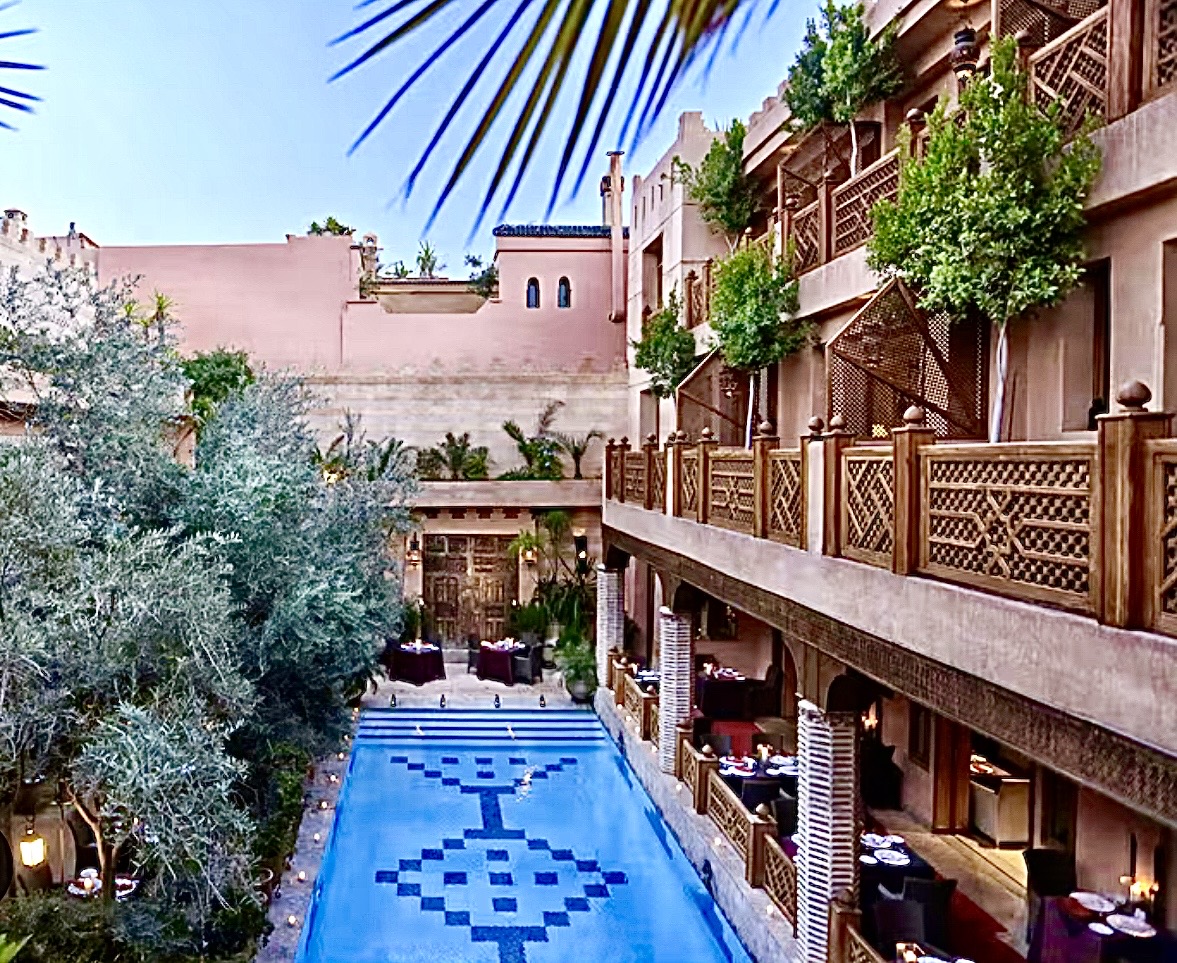
Maison La Arabe Marrakech with Amazigh (Berber) hotel pool motif (Image public domain)
By P. F. Sommerfeldt –
On occasion I’ve enjoyed taking cooking lessons, for example, in Lago Como, Italy, and while living in London and when I even had a conversation with Julia Child at a food show. My family – including a youngish adult daughter, her husband and their baby – were all in a pod together at our home in 2020 living upstairs during the pandemic. So I avidly read Melissa Clark every day in the New York Times – she became my new “best friend” as I prepared lunch and dinner meals daily for our family pod to try out new recipes to make our isolation more enjoyable, which really worked as many of these Melissa Clark NYT recipes are now standards in our house.
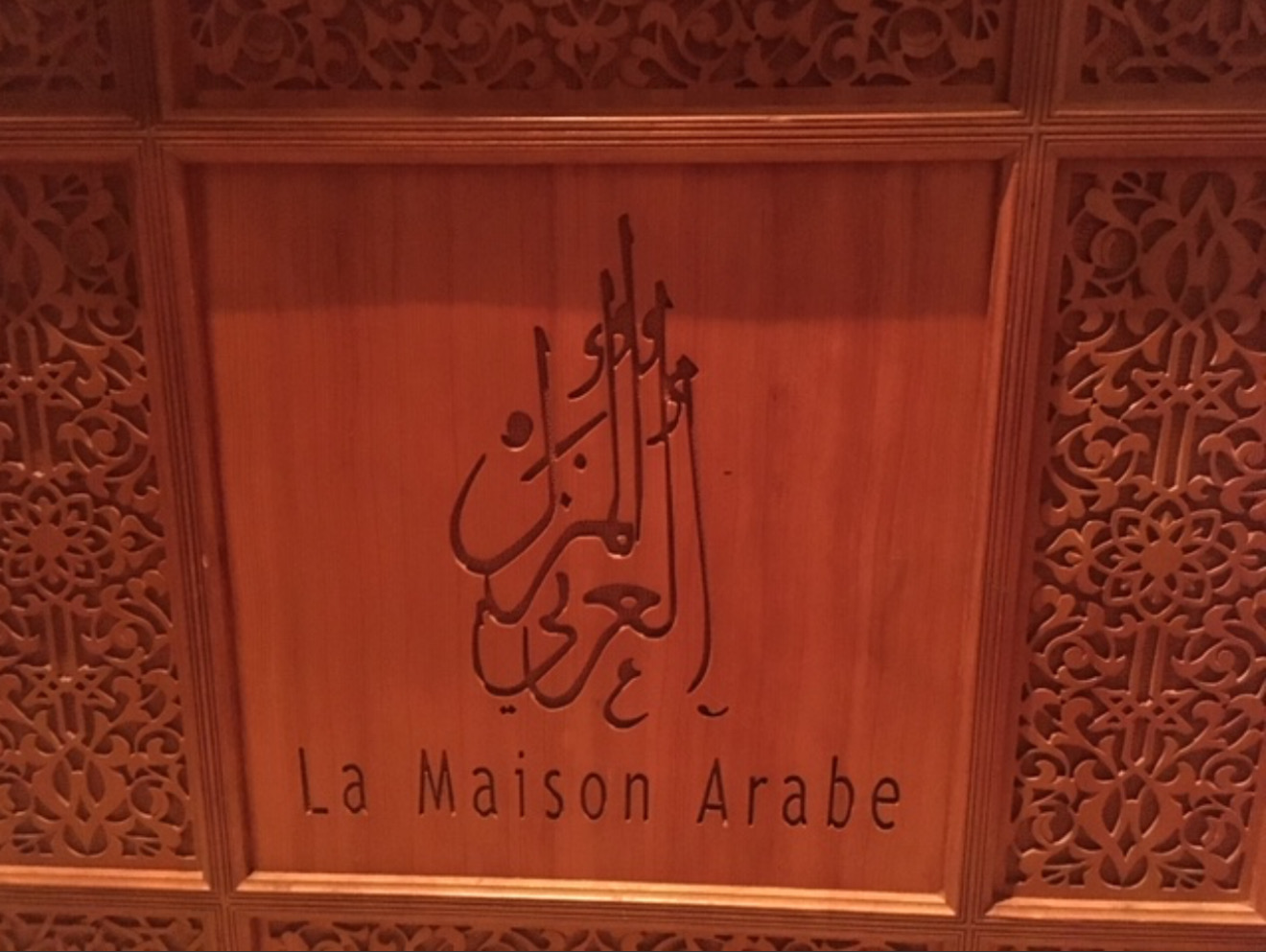
La Maison Arabe wood decoration (Photo P. Hunt 2026)
But my most fun and instructive culinary lesson ever was a recent cooking session this spring in Marrakech, Morocco on how to prepare and cook tagine at La Maison Arabe. No wonder it was the best experience yet because it was also the most professional, best organized and highest level of personal attention with sanitary state-of-the- art facilities. This Maison La Arabe cooking school is also the oldest in Morocco. I love Morocco and visit every few years, also buying Berber rugs again in Fes as in 2023 – having written a previous article for Electrum Magazine about this rug-buying experience in the Atlas Mountains at the time (https://www.electrummagazine.com/2023/03/moroccan-berber-rugs-a-brief-compendium/).
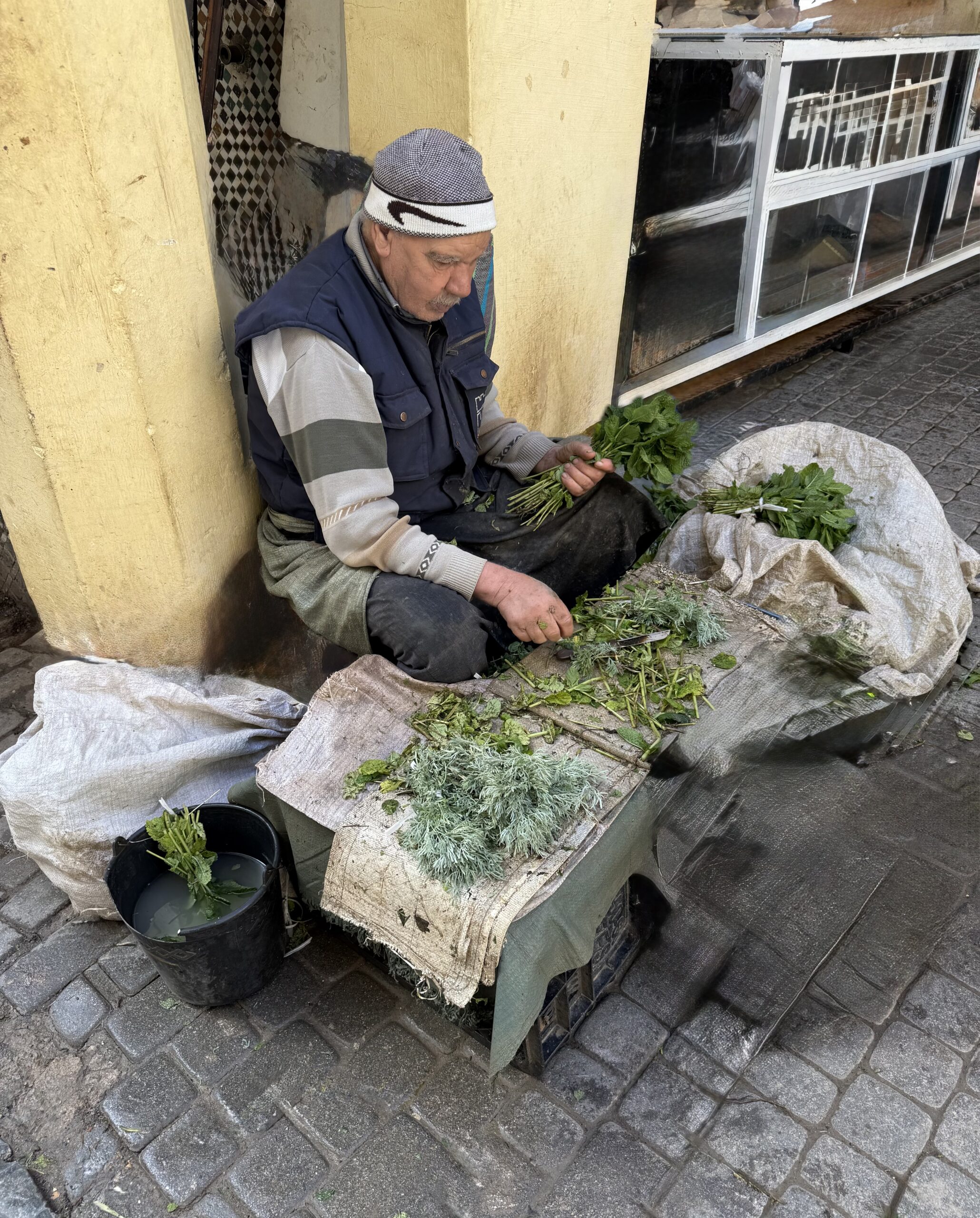
Wormwood (Artemesia absinthia) herb (in front) in Fes medina vendor (Photo P. Hunt 2026)
At the Maison La Arabe cooking school we each made our own individual tagine meals starting with the wormwood-infused mint tea. While mint tea is ubiquitous in Morocco, this wormwood ingredient (Artemisia absinthe) was new to me and to my husband who also works in ethnobotany. He mostly knew wormwood as an antihelmentic from ancient medical texts like Greek and Roman doctors’ codices and also in Egyptian papyri. In my husband’s Dioscorides medical garden, he cultivates wormwood along with at least a hundred other medical plants. It turns out wormwood’s (must be harvested in the morning only for best results) phytochemicals are not only effective against parasites and antimicrobial as well as antioxidant, but also good in the morning in tea as an analgesic and for greatly enhancing digestion. We saw wormwood frequently in medina souks around Morocco (Fes, Rabat, Meknes, Marrakech) but didn’t know exactly why until the cooking school. So my husband now has new practical material that is experiential and contemporary.
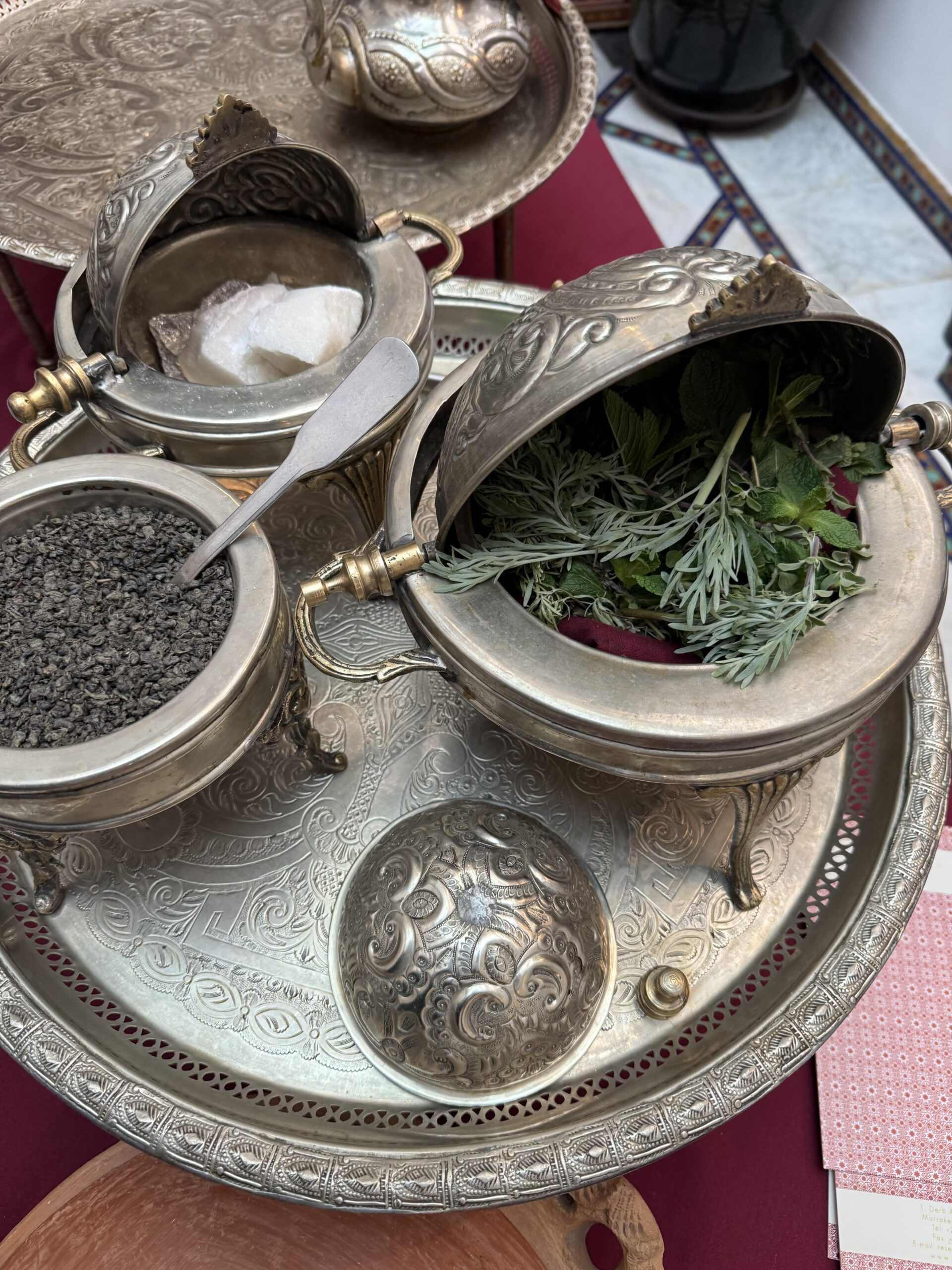
Maison La Arabe tea caddy with wormwood (Photo P. Hunt 2026)
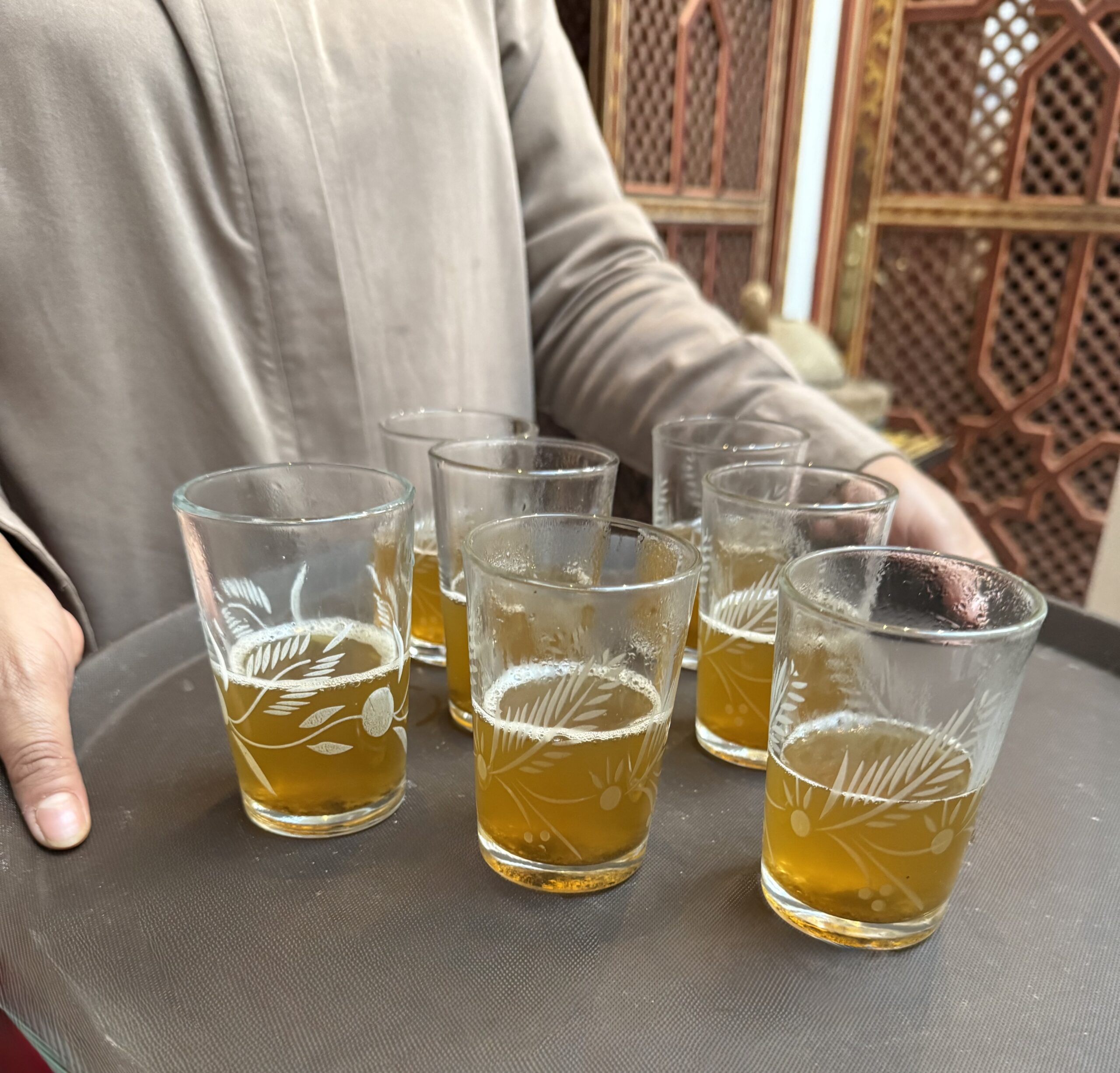
Moroccan mint tea (wormwood-infused) being served at Maison La Arabe (Photo P. Hunt 2026)
In our cooking lesson we were taught about vital Moroccan spices, which were passed around to be felt and smelled. They were carefully measured out and their properties and flavors were discussed in detail. The main spices we used were paprika, cumin, white pepper, and turmeric which we used at home but the most interesting combo spice was Ras-el-Hanout, which means “head of the kitchen” in Arabic for its all-purpose importance, comprised of mixing many spices (up to 50 or many more including ginger, nutmeg, clove, cinnamon and coriander as well as orris root whose tubers we passed around like ginger or turmeric). This is a rich, earthy and aromatic spice mixture and warms the body without hot peppery heat. Ras-el-Hanout has been a sign of wealth and prestige in Maghreb (North Africa) homes for centuries and perhaps it is the most memorable in Moroccan cuisine and a vital Berber staple.
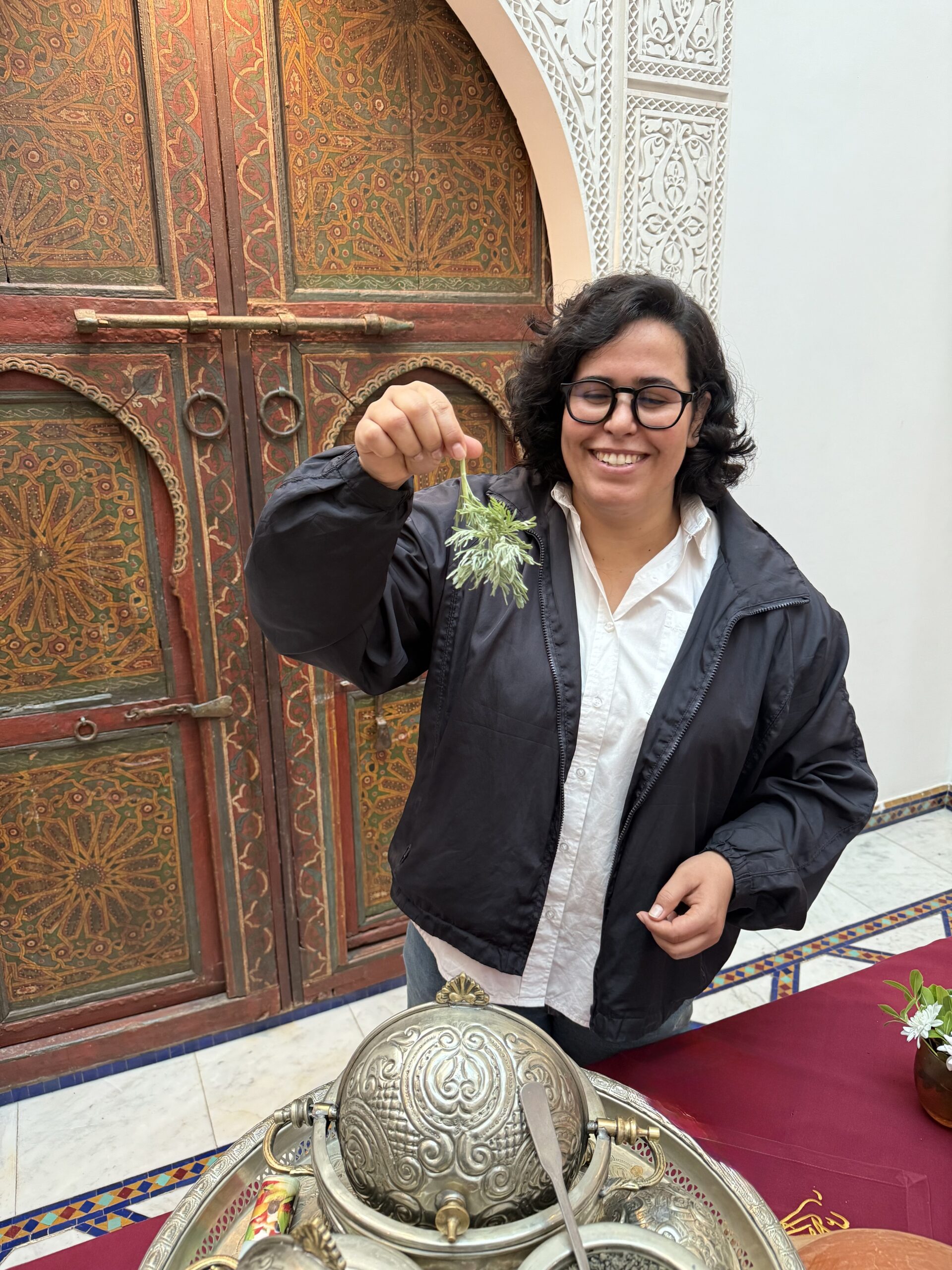
Hasna, manager of Cooking School at Maison la Arabe (Photo P. Hunt 2026)
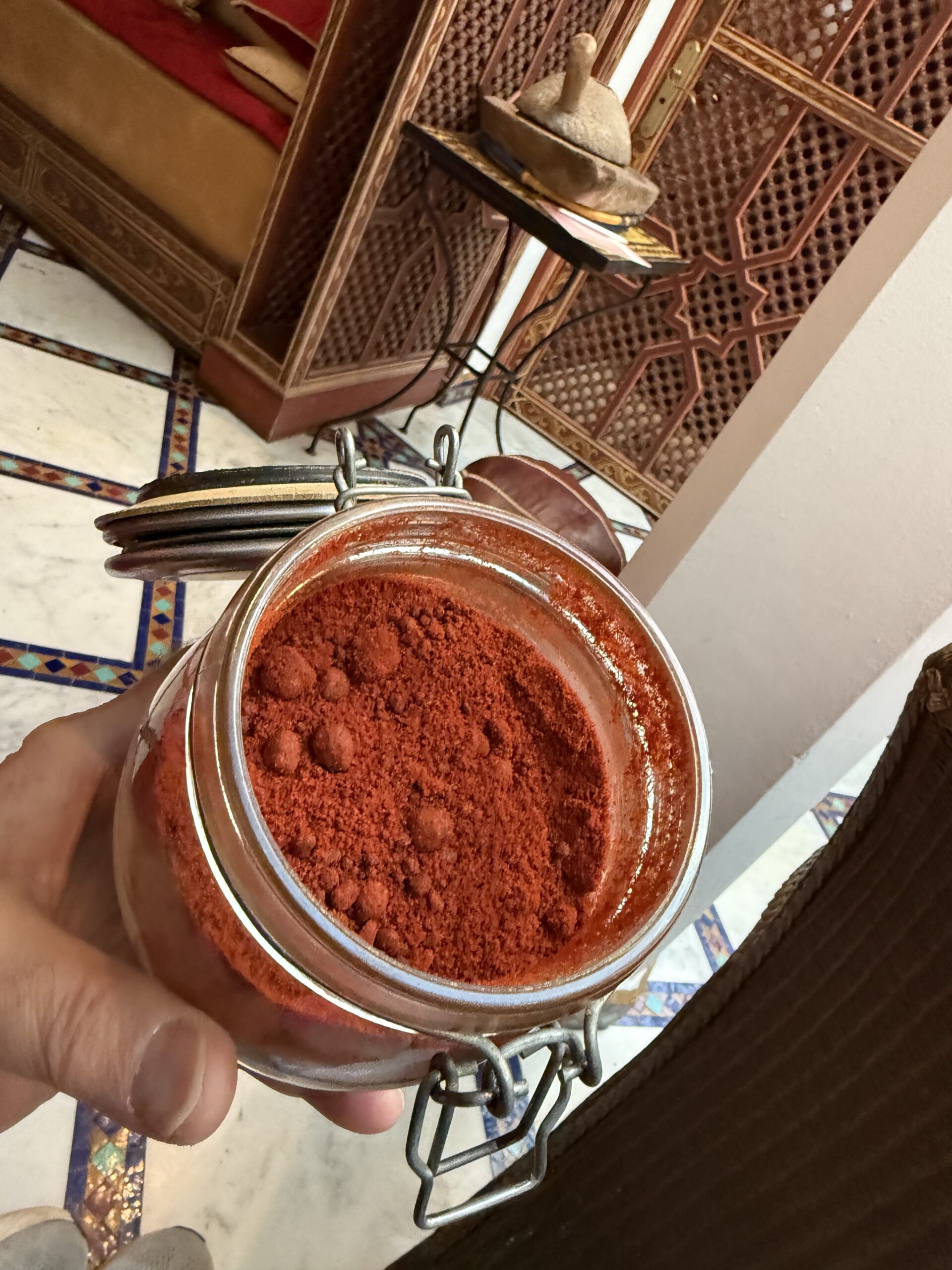
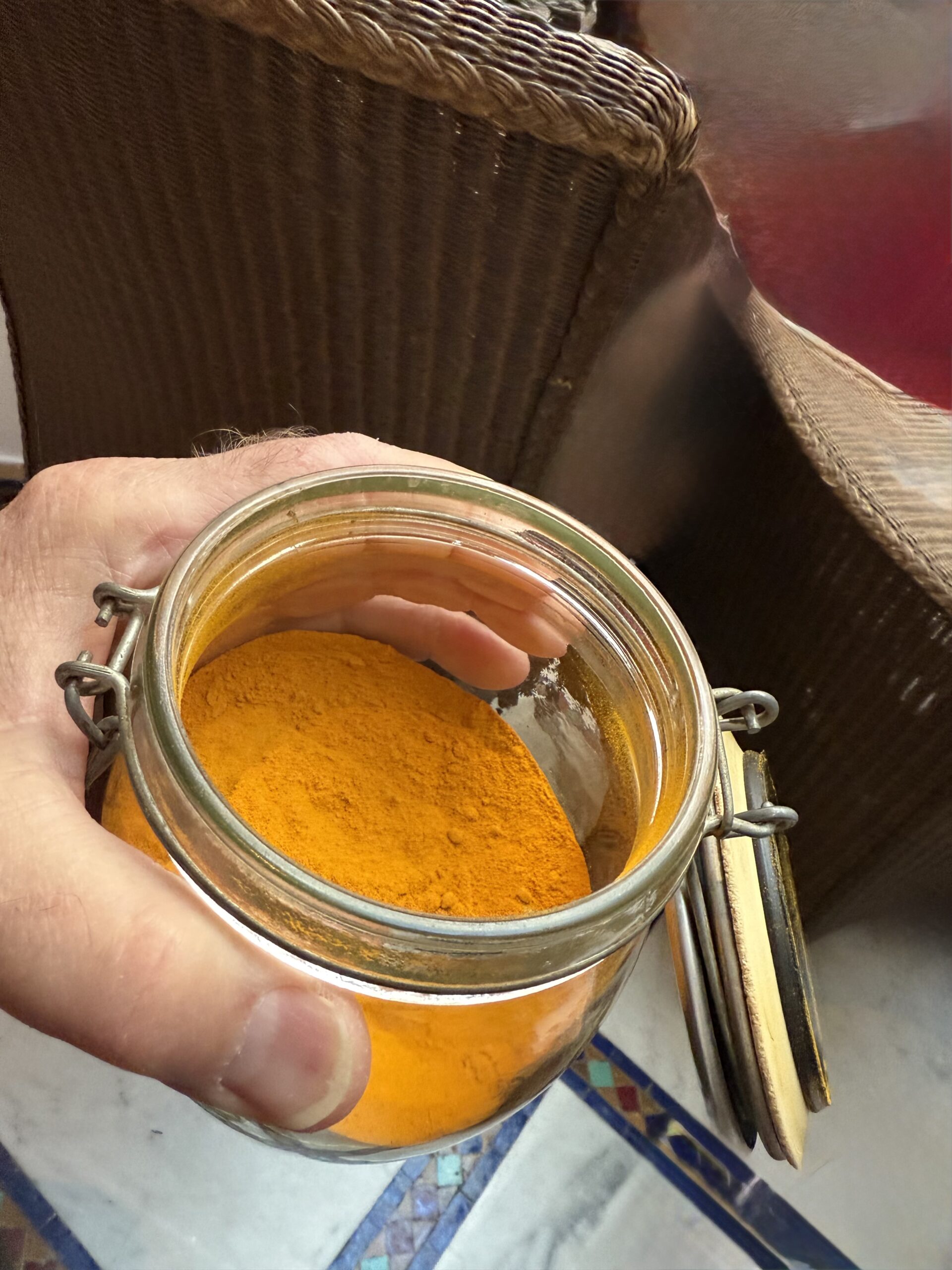
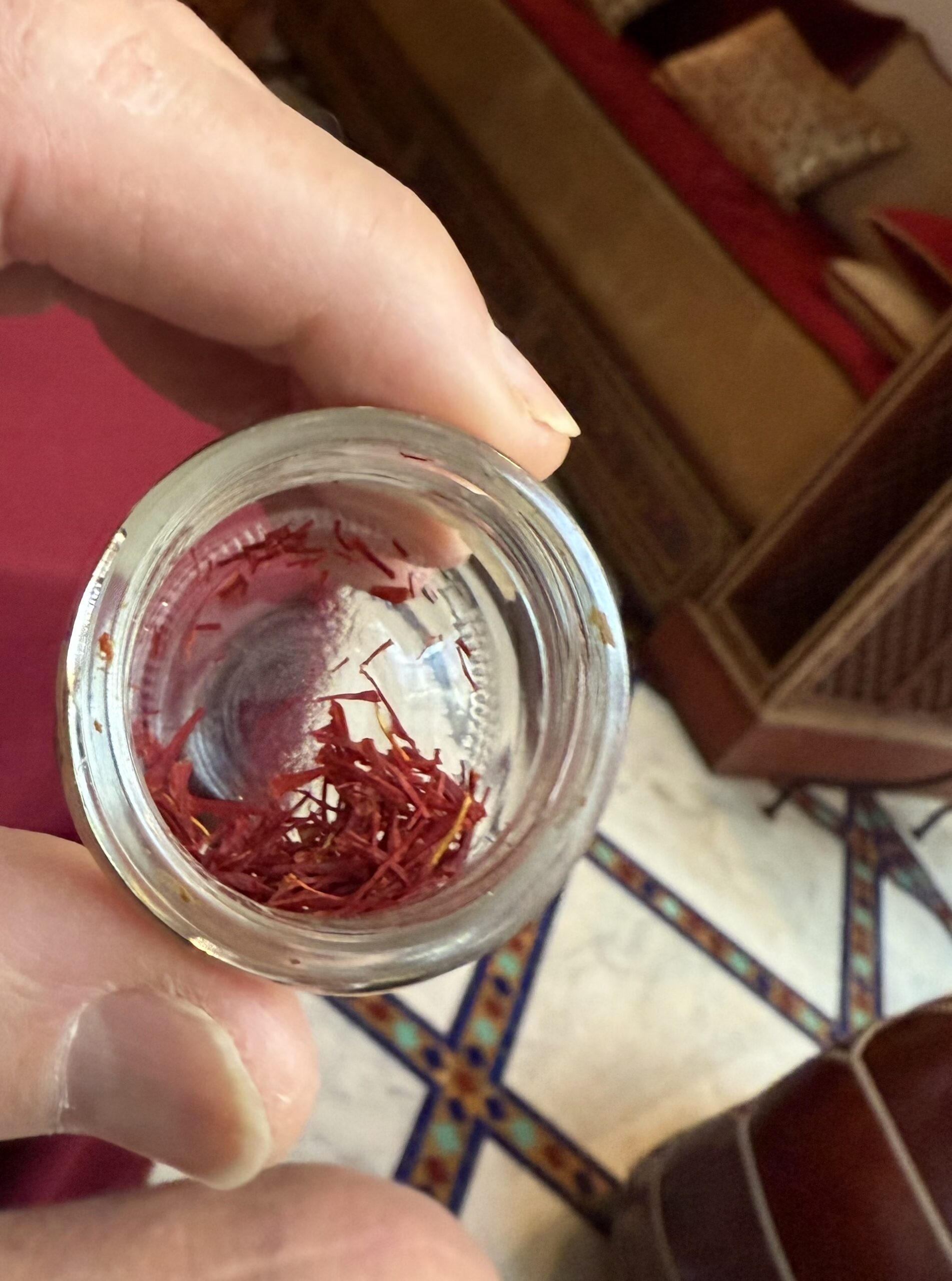
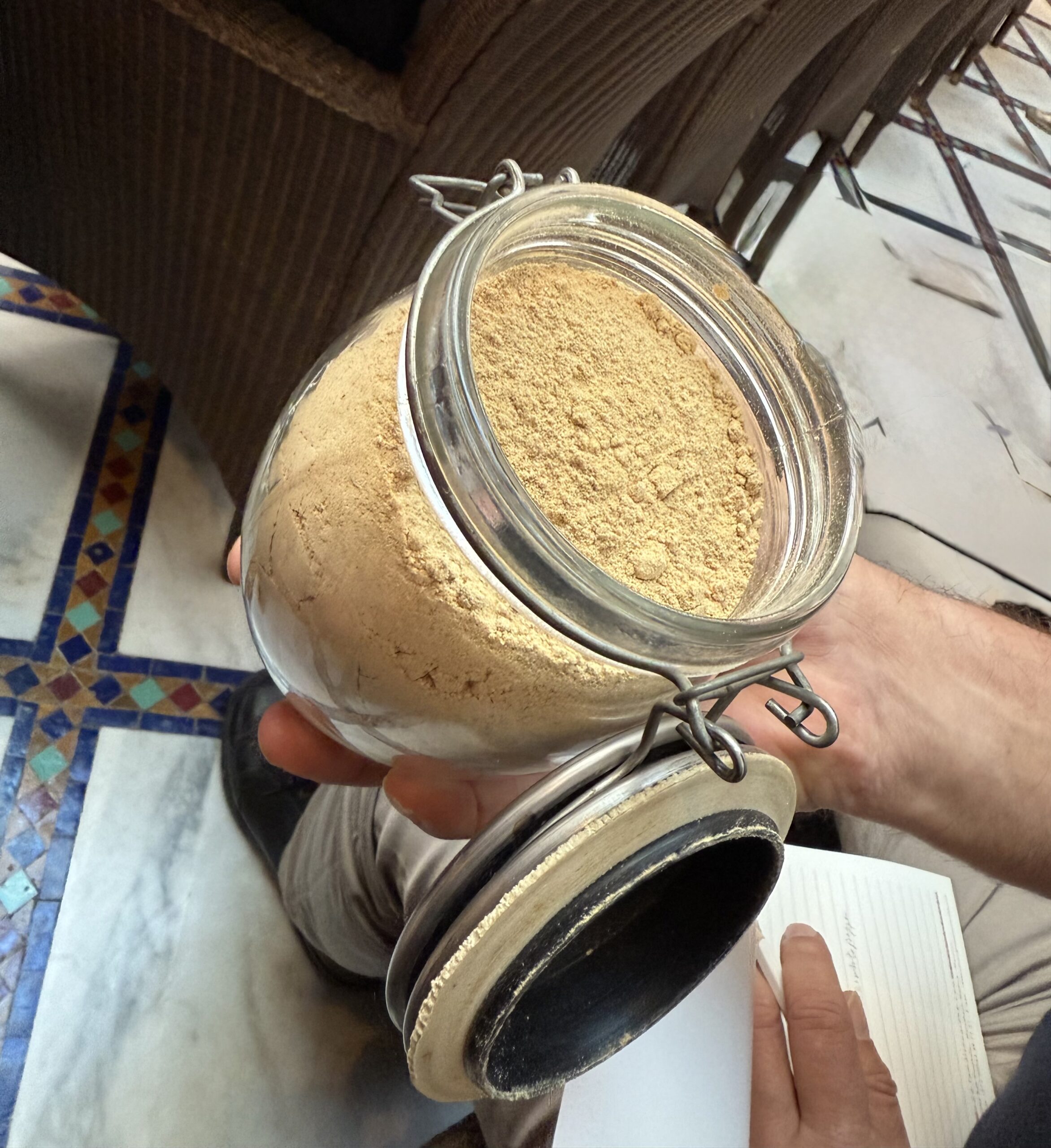
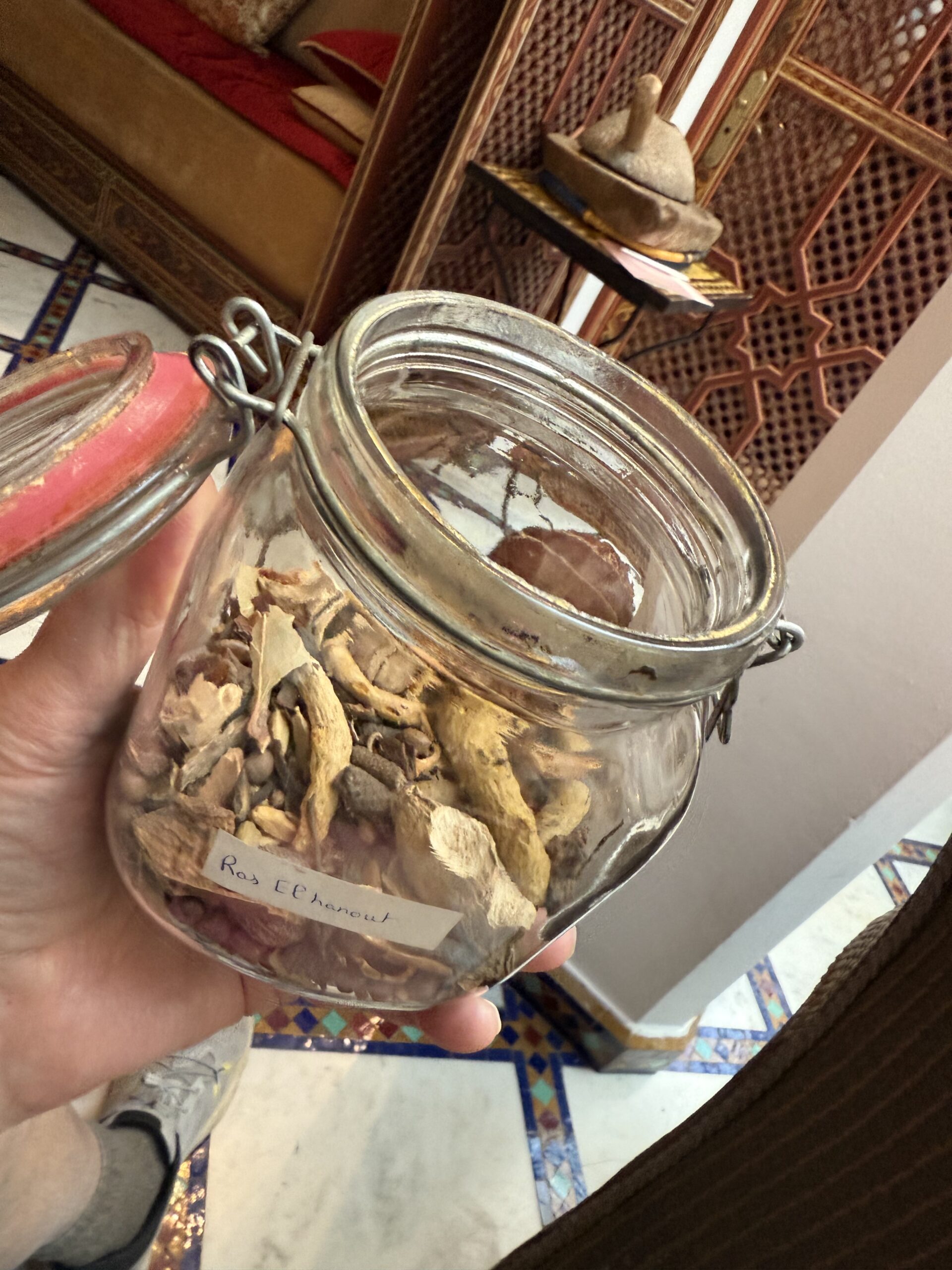
Moroccan spices from top to bottom above : paprika, turmeric, saffron, cumin, orris root for Ras-el-Hanout, (Photos P. Hunt 2026)
After our group classroom 30 minute lesson from Hasna el-Filali and assistant Sukheina, we all walked into a big fully-equipped kitchen room with cooking stations for everyone (20 persons). It was step by step instruction starting with kneading bread. Everything was all planned and thorough and each item was washed or cleaned between each step. I also learned how to preserve (technically “pickle”) lemons, so now have quite a few “distilling” in my refrigerator at home, both Meyer and Eureka although the Meyer lemons are certainly sweeter.
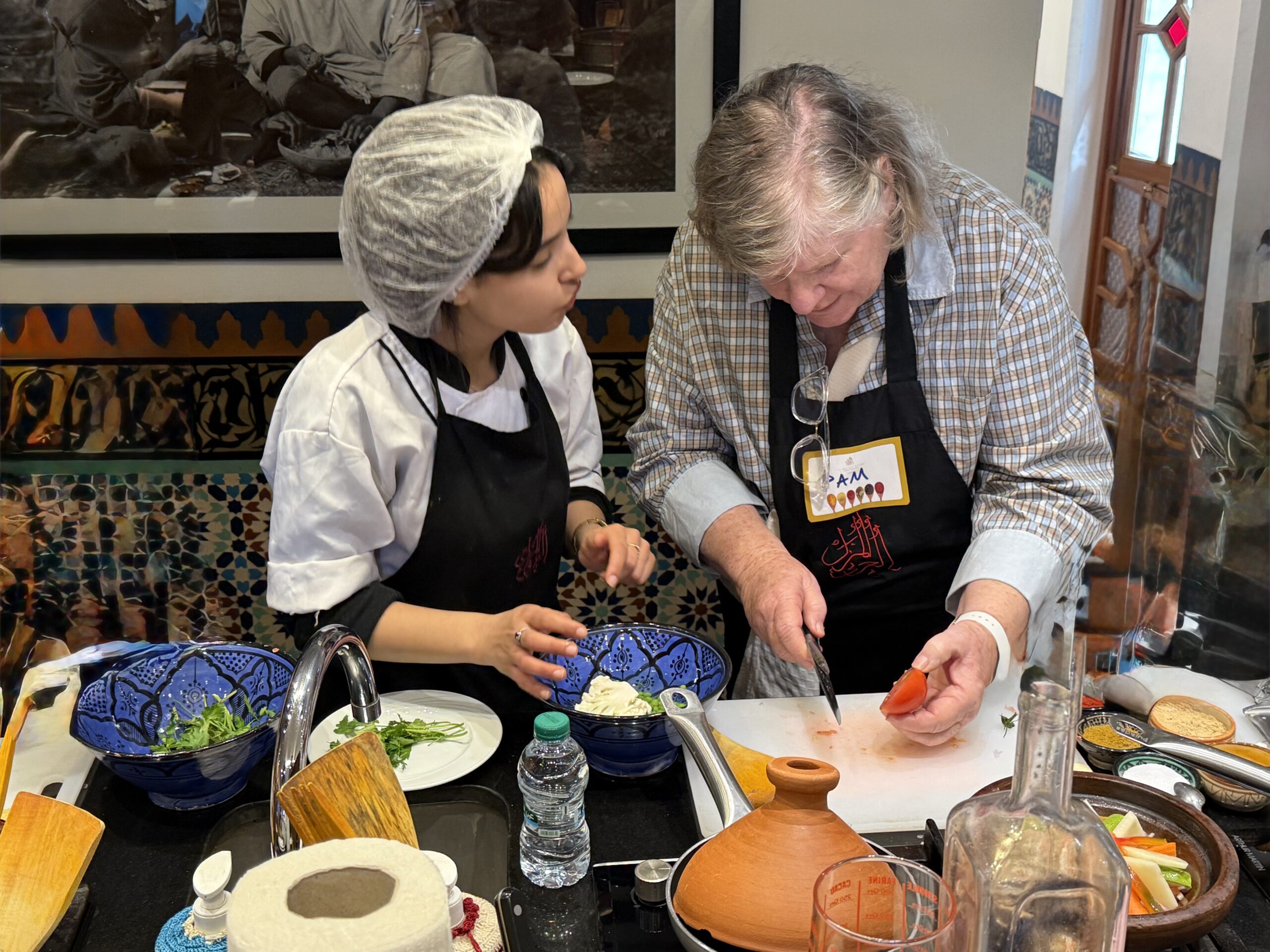
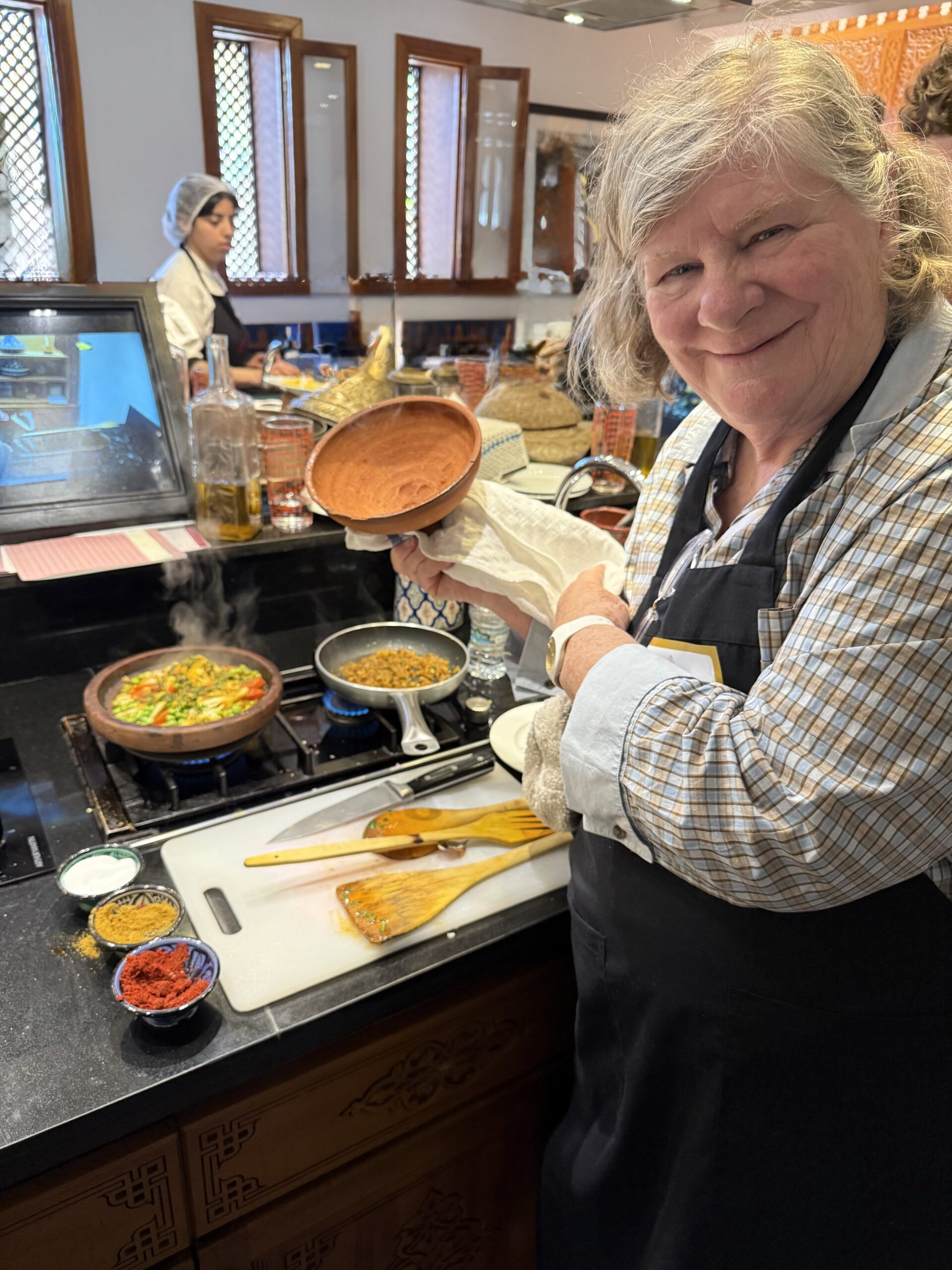
Author (P.F. Sommerfeldt) being instructed in tagine cooking (Photo P. Hunt, 2026)
It helped that Maison la Arabe’s competent culinary school manager and our supervising teacher Hasna el-Filali was fluent in English and articulate (earned her MA in Linguistics) and well-informed as well as patient. Her assistant Sukheina went around to each of us at our stations and was also patient. The cooking school instructors were fun and the always-smiling Fatiha, head cook was at the front of the class on a raised dais with live TV-video feeds which we also viewed on our screens as needed. One of the most-endearing parts of her instruction was that she sang lovely Moroccan songs while she cooked. We had to keep up with each timed segment but it wasn’t challenging. One of the best elements was a group meal at the end where we ate what we produced, a very satisfying result. We were awarded certificates of success and a clay tagine each, so we now have two in our home kitchen. Traveling around Morocco we then recognized clay tagine vendors in almost every Atlas Mountain village.
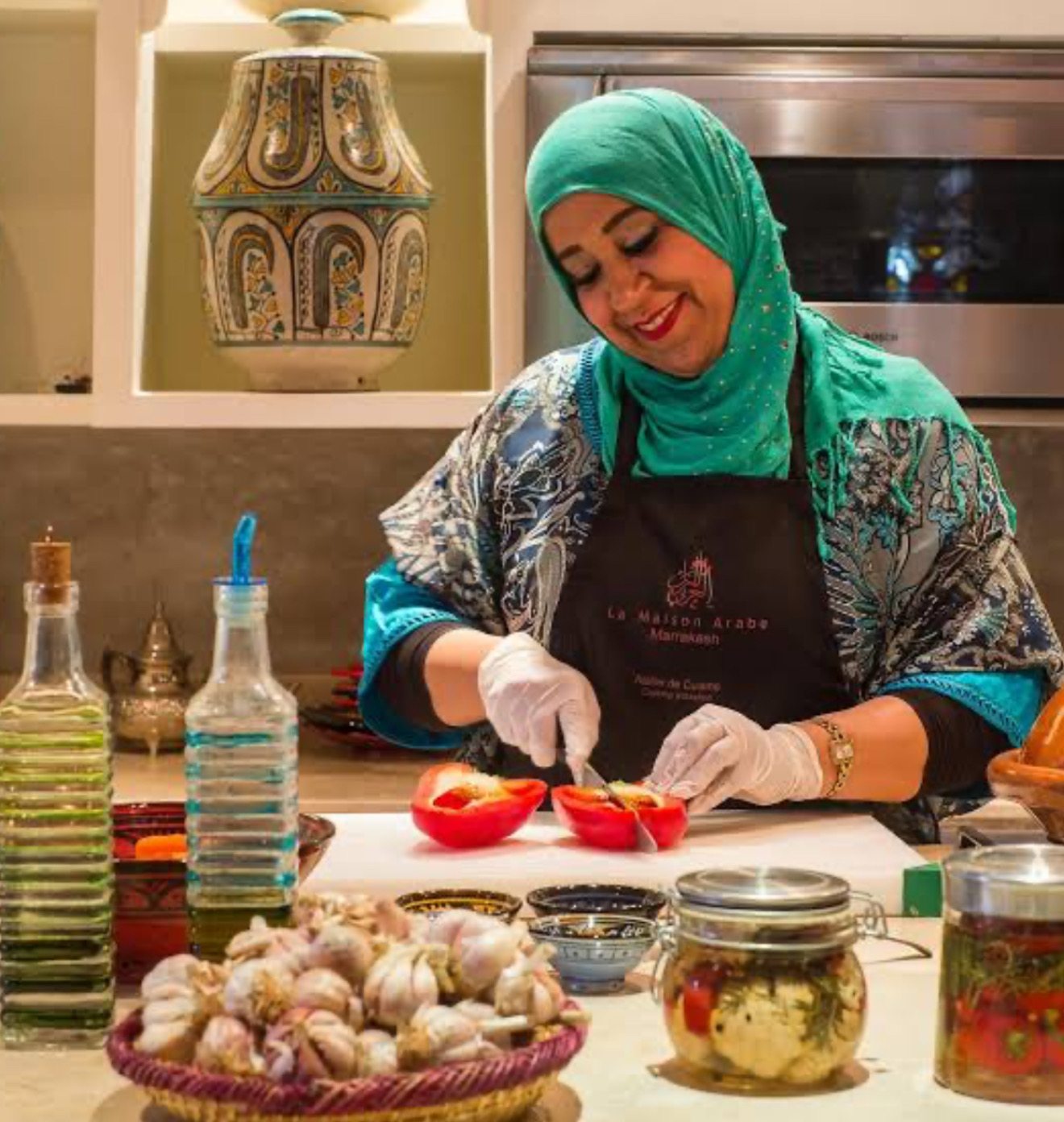
Head chef Fatiha who sings as she teaches Moroccan cooking (Image public domain)
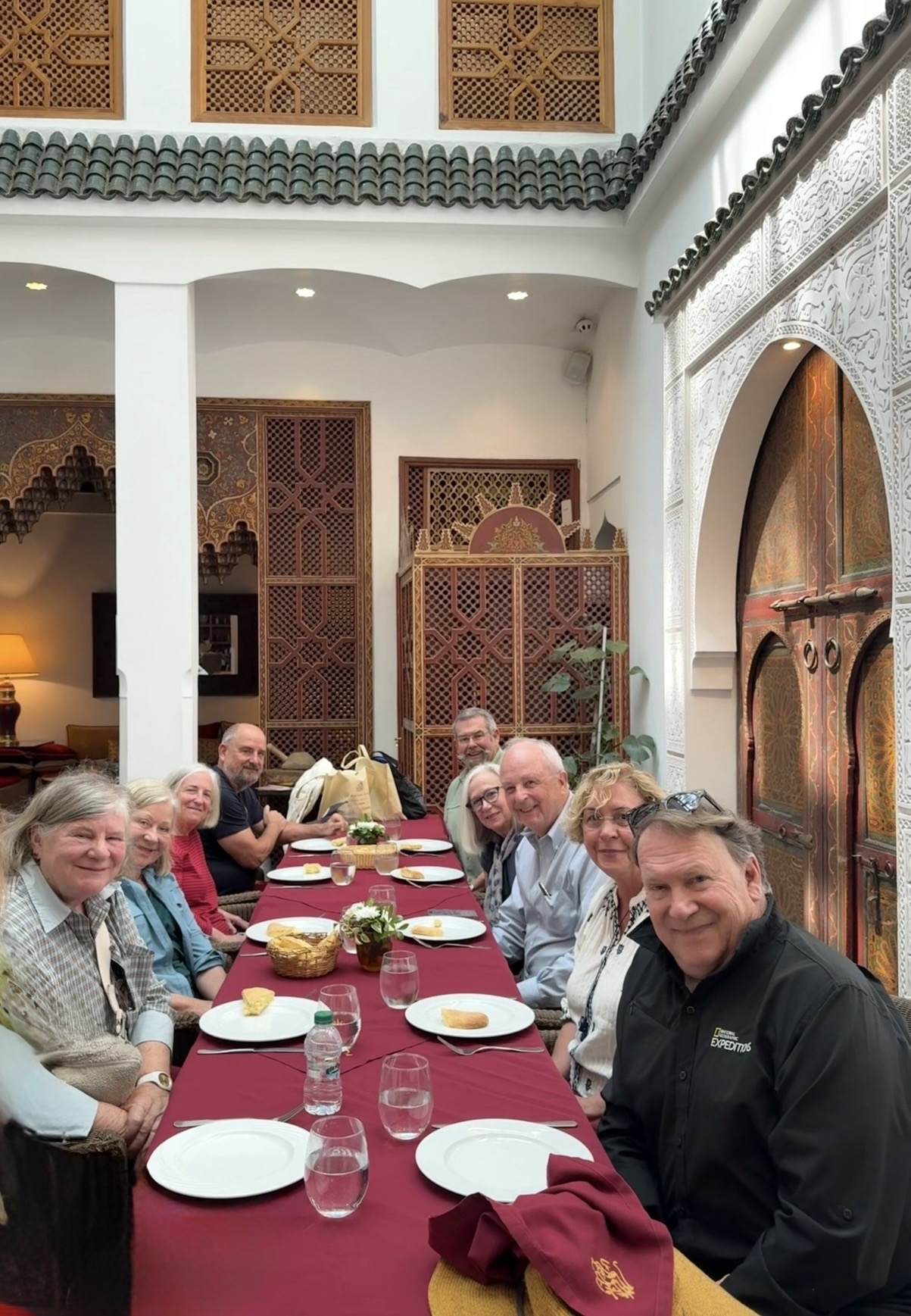
Some like me chose the vegetarian tagine cooking menu to follow and others chose the chicken tagine but many of the steps were comparable. Even my messy husband – not usually allowed in my kitchen when I’m cooking – initially didn’t want to set aside the necessary time (2 hours) for this cooking lesson but he enjoyed it thoroughly and said it was time well-spent and one of his favorite events in Marrakech after several visits there over the years. Next time we return to Morocco we’ll ask for whatever advanced cooking class is available from Hasna before we venture out to go rug-shopping in the medina !
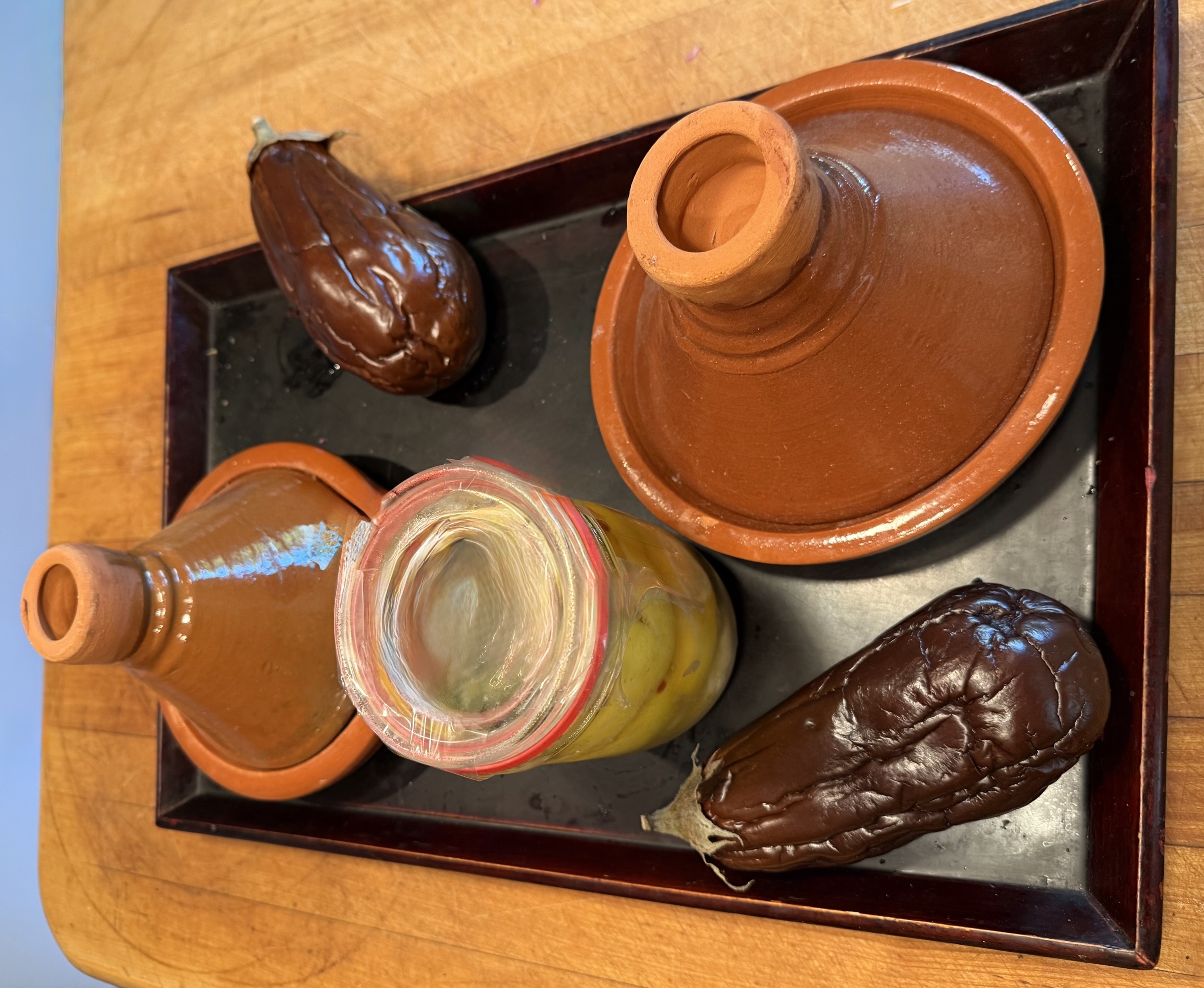
Author’s kitchen at home with two tagine clay pots and preserved lemons (Photo P. F. Sommerfeldt 2026)