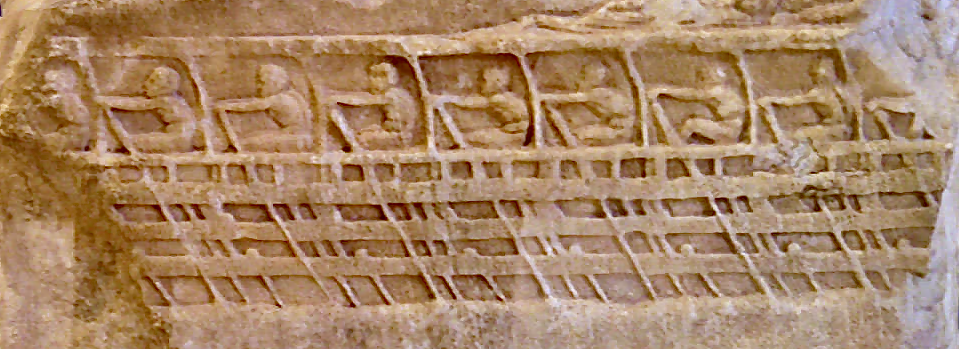
By Jess Taylor –
The Lesbian Revolt
In 428 BCE, Mytilene, the most powerful polis on the island of Lesbos, was preparing to revolt from the Athenian Empire. They were allied with the island poleis of Antissa, Pyrrha, and Eresos. A fifth island polis, Methymna, was hostile to Mytilene and refused to participate. At the time, all five poleis were members of the Delian League—a naval alliance formed to counter Persia that Athens had gradually transformed into its own empire.
Mytilene revolted for two connected reasons. Internally, its goal was synoecism—a political unification of all the island poleis—a long-term ambition they knew an increasingly imperial Athens would never approve, as it would make Lesbos more powerful and harder to control. Externally, they watched with growing alarm as Athens systematically dismantled the autonomy of other Delian League members, figuring it was only a matter of time before they too were stripped of their independence. Thus, the revolt became a proactive measure.
Seeing that Athens was currently weakened by the Peloponnesian War and recovering from a devastating plague, the Mytileneans calculated that the timing was right. They hoped their revolt would be a distraction the Athenians might ignore given their circumstances, especially if the Peloponnesians could be convinced to send direct military aid to Mytilene.
While the coalition prepared for their revolt by strengthening defensive walls, improving harbors, and securing Black Sea mercenaries and food supplies, word of the plot was leaked to Athens by Methymna.
In response, the Athenians sent a naval force to Lesbos. When the Mytileneans refused to cease their activities, General Paches arrived with reinforcements to completely besiege Mytilene, aiming to starve them into submission. This strategy worked when the commoners, facing starvation, mutinied against their oligarchic leaders. A temporary truce was negotiated, allowing a group of Mytilenean diplomats to travel to Athens to beg the assembly for leniency.
The Athenian Assembly first met to discuss the matter before the Mytilenean diplomats reached Athens. Guided by the stern arguments of the demagogue Cleon, who counseled against differentiating guilt between the elite leaders and the common followers, the assembly voted for andrapodismos—ordering the immediate dispatch of a trireme to Lesbos with instructions to slaughter all adult males and sell all women and children into slavery.
Thucydides, the only contemporary chronicler of these events, famously elaborates on the mood of the assembly:
ὑπὸ ὀργῆς ἔδοξεν αὐτοῖς οὐ τοὺς παρόντας μόνον διαφθεῖραι, ἀλλὰ καὶ τοὺς ἅπαντας Μυτιληναίους ὅσοι ἥβων, παῖδας δὲ καὶ γυναῖκας ἐξανδραποδίσαι· ἐπικαλοῦντες τά τε ἄλλα καὶ ὅτι οὐκ ἀρχόμενοι ὥσπερ οἱ ἄλλοι ἀπέστησαν…
— Θουκυδίδης, Ἱστορίαι, 3.36.2
“Under the impulse of anger, they resolved to put to death not only the Mytileneans who were there, but the entire adult male population, and to make slaves of the women and children. They were particularly furious because the Mytileneans had revolted without the excuse of being subjects, like the rest.”
— Thucydides, 3.36.2Before looking at the actual outcome of this potential over-reach on the part of Athens, it will be helpful to survey important apropos political terms and the main cities and details of the island Lesbos at the time of the 5th c. BCE, following here.
Polis (pl: Poleis): The term city-state is commonly used to succinctly describe the ancient Greek polis (πόλις, pl: πόλεις). However, the HN Polis Inventory considers the term too broad being a modern term applied to many cultures worldwide. Instead, it states the Greek word polis had four senses (a) stronghold or citadel, (b) nucleated settlement, (c) country or territory and (d) political community.
Synoikism or Synoecism (συνοικισμός): The combination of a collection of poleis into a larger polis, sometimes affecting the pattern of settlement, such as in Rhodes in 408/7 BCE, and other times not, as with the attempt by Mytilene on Lesbos in 428 BCE.
Andrapodismos (ἀνδραποδισμός): The complete destruction or subjugation of a conquered polis, which usually involved executing all adult males and selling the women and children into slavery.
Delian League: Formed in 478 BCE, following the Persian defeat in 480 BCE, the Delian League was an alliance of approximately 319 poleis (of over 1000) concentrated within the Aegean Sea region. Led by Athens its goal was to continue the fight against the Persians, protect Ionian Greek cities in Anatolia, and guard against future invasions. Annual dues (phoros) were expected in the form of silver, or in the case of Lesbos, Chios and Samos, ships. The treasure was initially maintained on the island of Delos and was subsequently transferred to Athens. The league was dissolved in 404 BCE after the surrender of Athens to the Peloponnesians.
The Island of Lesbos
Located off the western shore of Anatolia (modern-day Turkey), Lesbos (figure 1) is the third-largest (1,633 sq km) of the Greek islands, after Crete (8,450 sq km) and Euboea (3,684 sq km). A mountainous volcanic island rich in land and sea resources, it was settled by Aeolian Greeks from Boeotia and Thessaly, likely over an extended period spanning from the late Bronze Age to the early Iron Age.
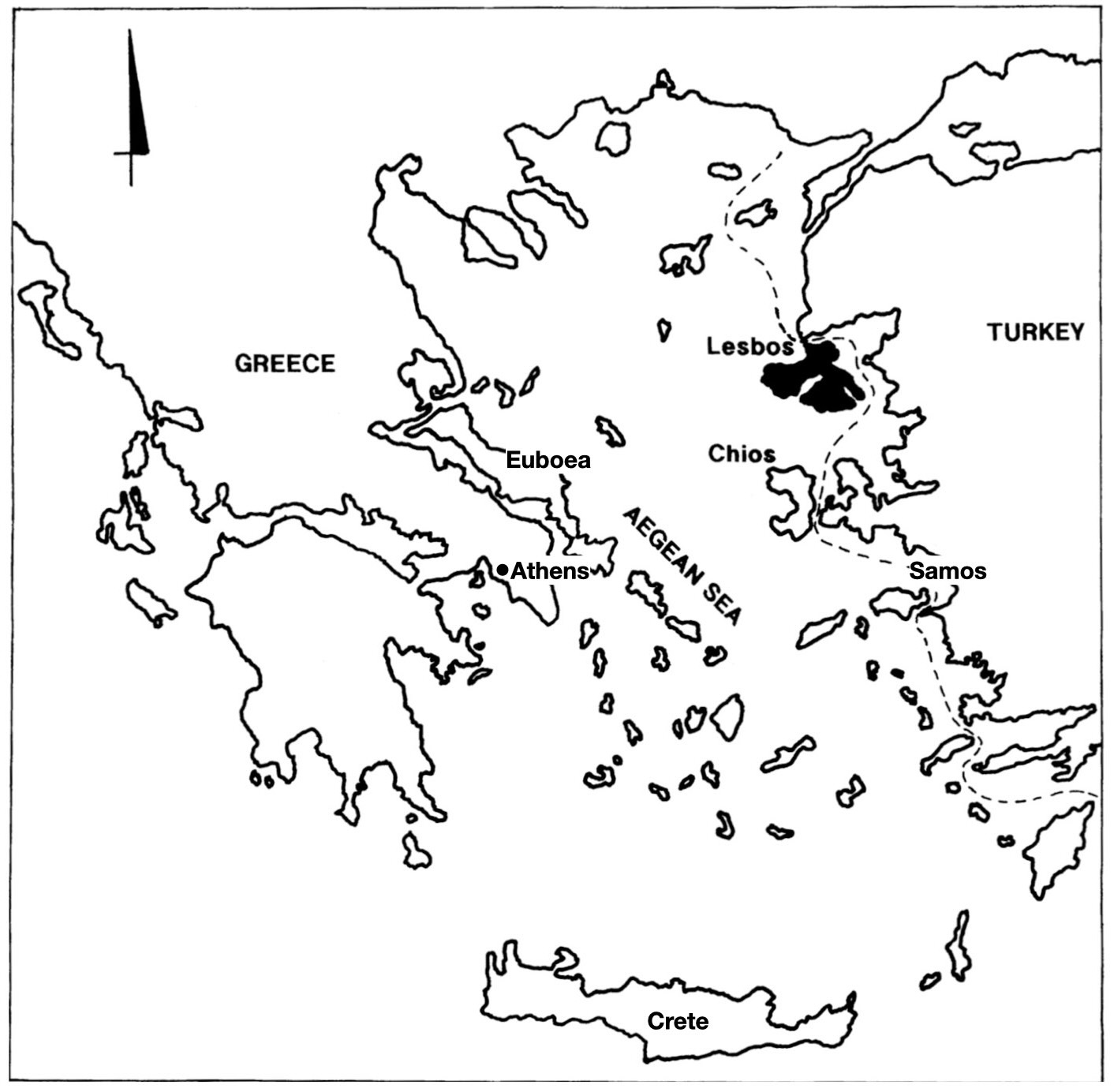
At some point during the 6th century BCE, Lesbos came under Persian rule. The Lesbians joined the unsuccessful Ionian Revolt (499–493 BCE). Following the decisive defeat of the rebellion in 494 BCE, the entire island of Lesbos was subjected to severe punishment by Persian forces; their cities were sacked and their leaders executed, but the Persians stopped well short of andrapodismos, allowing Lesbos to recover quickly.
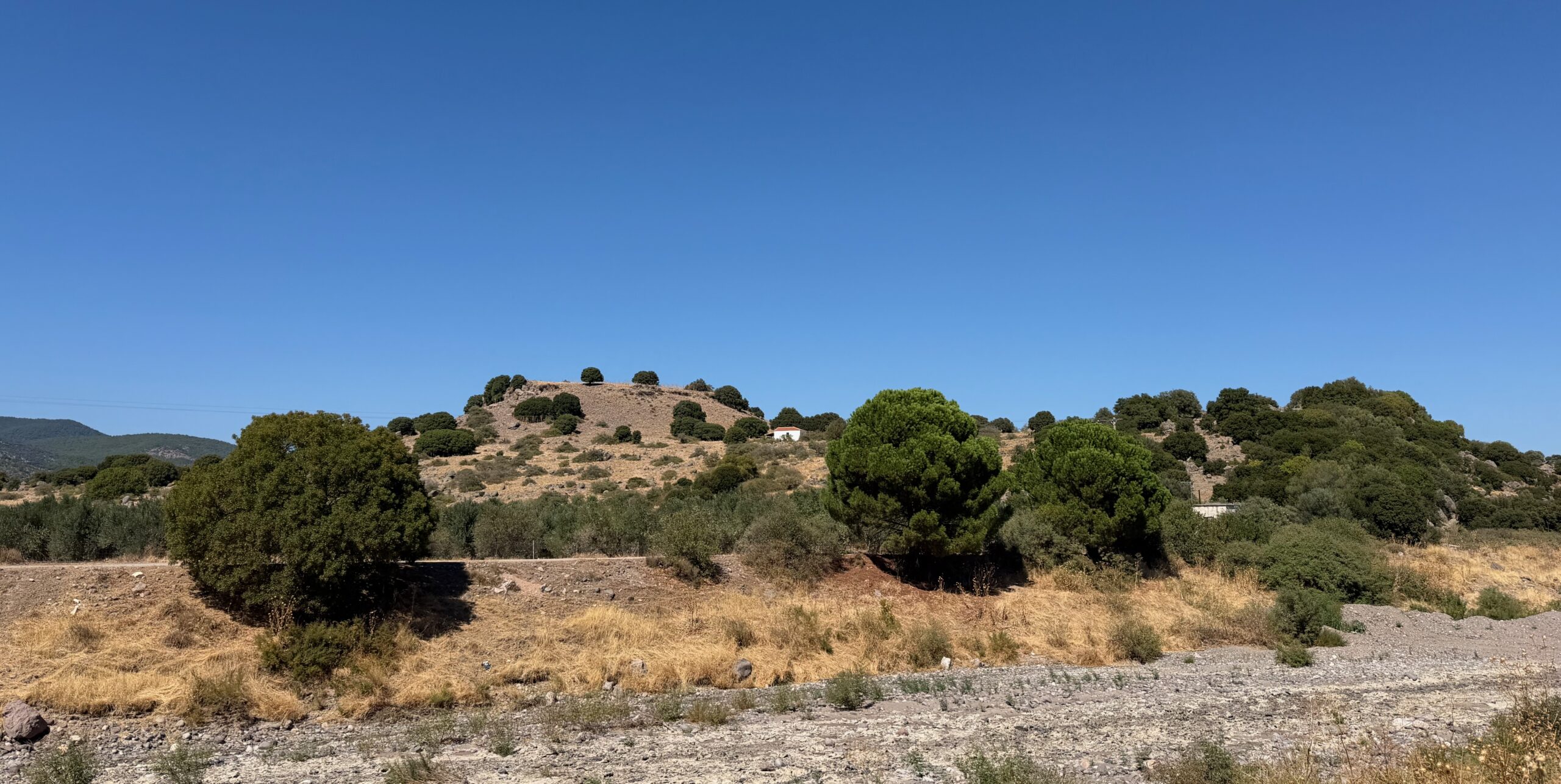
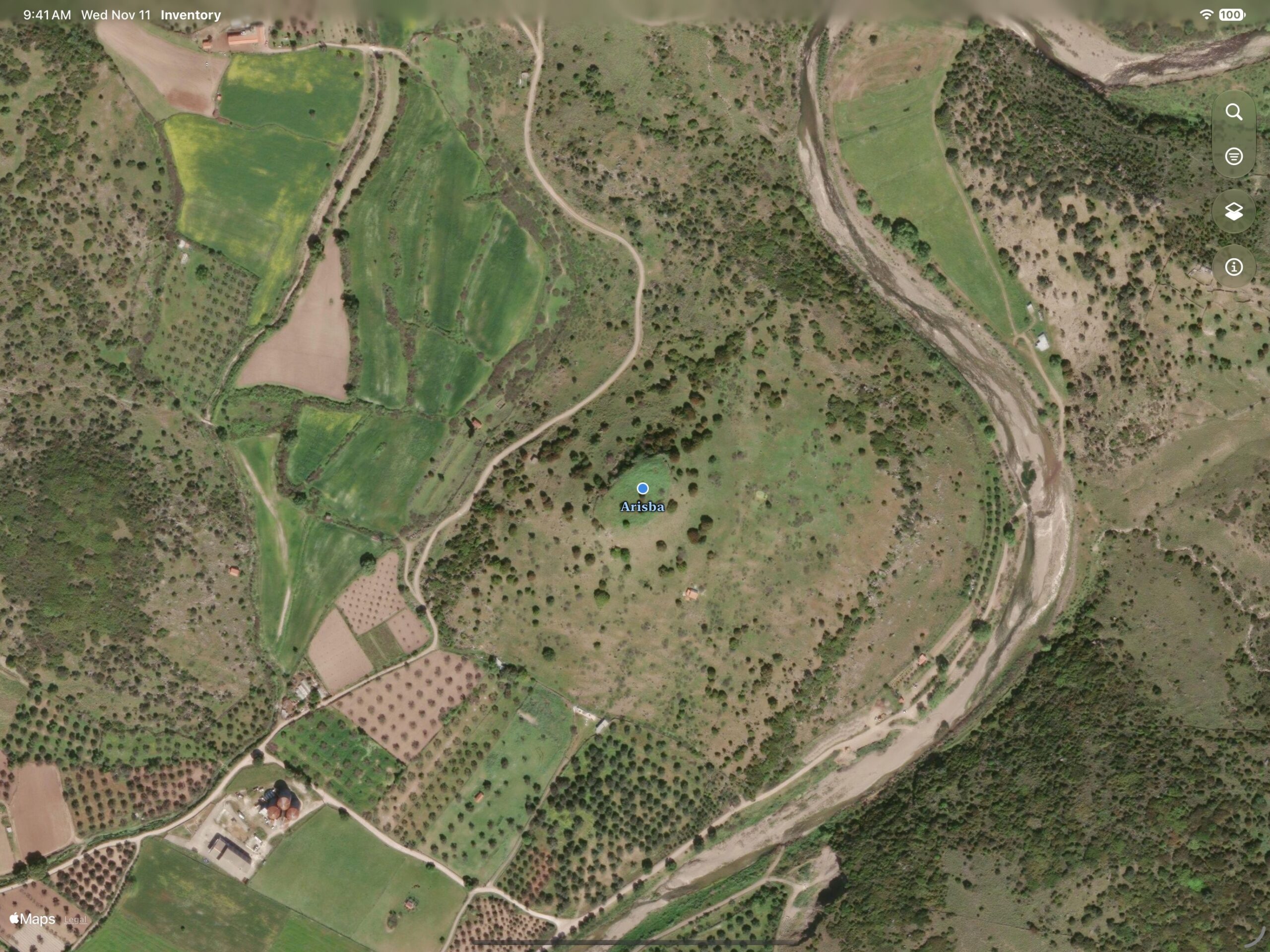
Ancient sources record that there were five poleis on Classical Lesbos: Mytilene, Methymna, Antissa, Pyrrha, and Eresos. A sixth polis, Arisba, existed prior to the 5th century BCE; it was conquered by Methymna, likely in the 6th century BCE, which subjected its population to andrapodismos before incorporating its territory (figure 2).
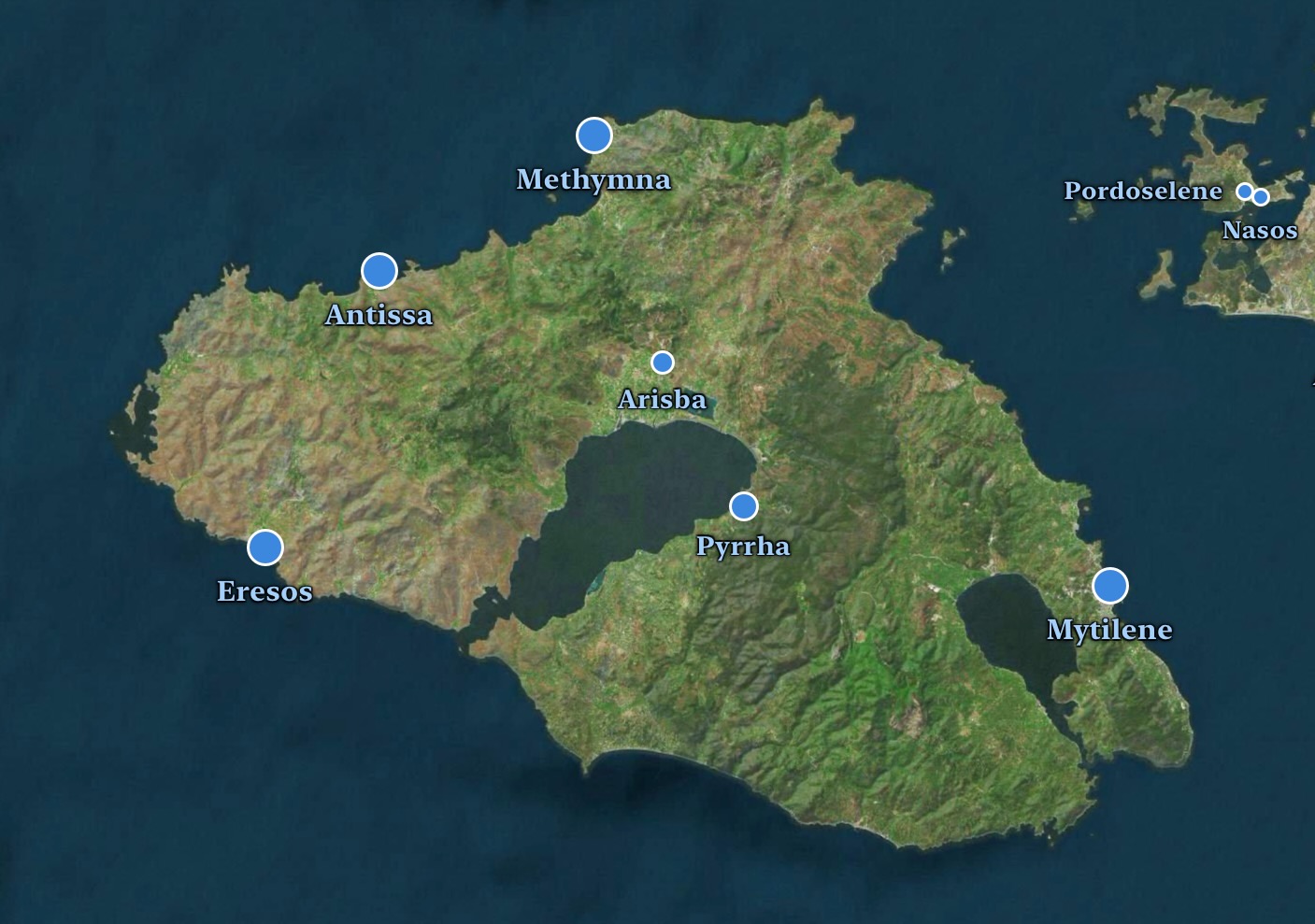
All five remaining poleis were original members of the Delian League, joining in 478 BCE. They enjoyed a privileged status whereby they were both self-governing (autonomoi) and independent (eleutheroi), providing their annual Delian contribution in the form of manned ships rather than money (phoros). This arrangement was unique to Lesbos and the islands of Chios and Samos.
Historically, Mytilene was the dominant polis on the island and maintained an oligarchic political structure during the Classical Period. Antissa, Eresos, and Pyrrha generally followed the lead of Mytilene. In contrast, Methymna was democratic and opposed Mytilene at every step. Today, more is known about ancient Lesbos from existing literature than from archaeological evidence, as the ancient sites remain largely unexcavated.
Reference Time Periods
- Bronze Age 3500 – 1100 BCE
- Early Iron Age (Dark Ages) 1100 – 900 BCE
- Geometric Period 900 – 700 BCE
- Archaic Period 700 BCE – 480 BCE
- Classical Period 480 BCE – 323 BCE
Mytilene
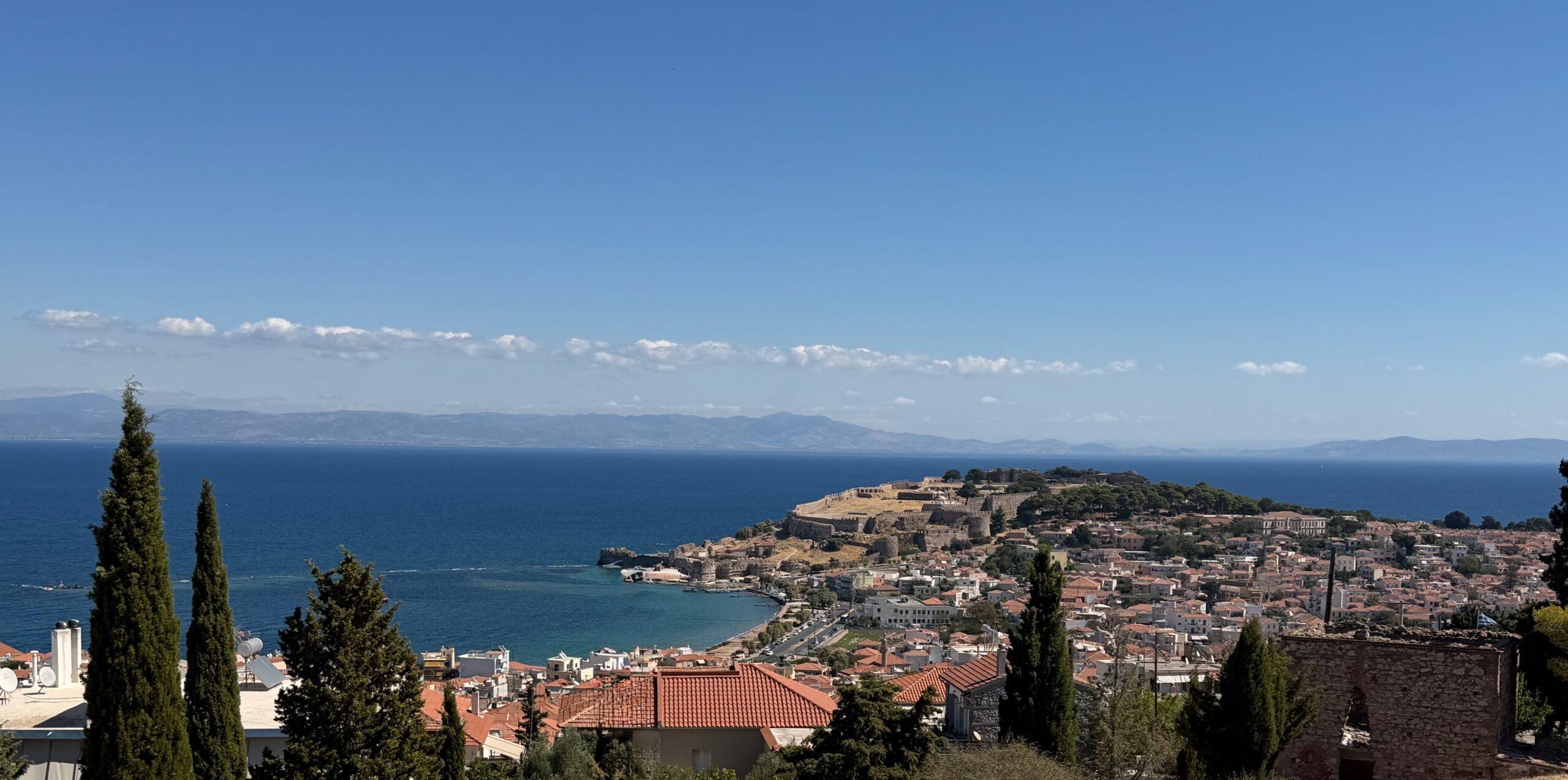
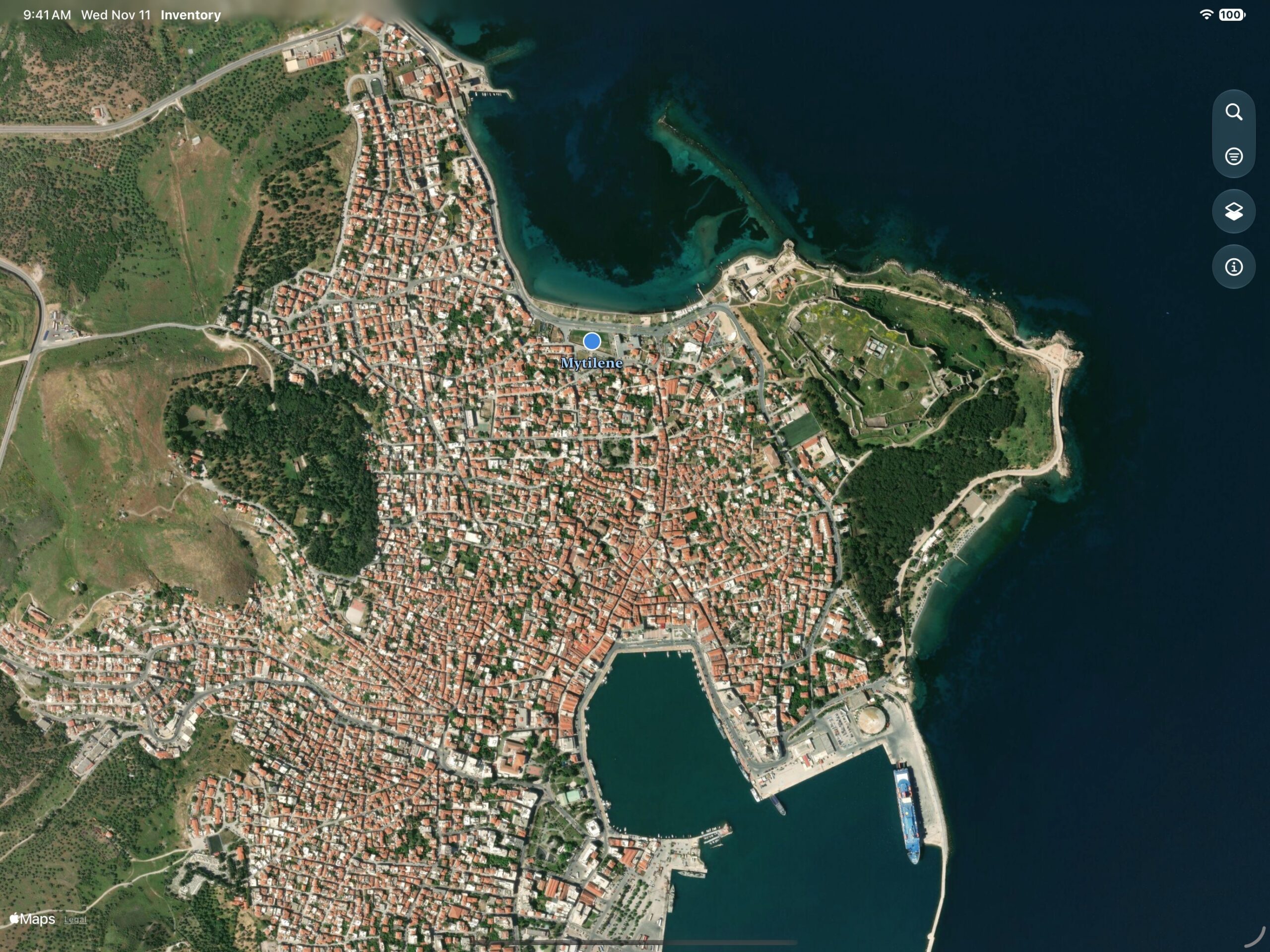
Located on the eastern end of Lesbos, its remnants lie beneath the modern city of the same name. What little has been excavated has rarely penetrated the Archaic and Classical periods, though settlement traces exist showing site occupation dating back to the Iron Age.
The ancient city boasted a north and south harbor connected by a wide, now-silted, waterway (the modern Odos Ermou). It occupied the eastern island and acropolis, as well as the western mainland located between each harbor (figure 3, 4 and 5).
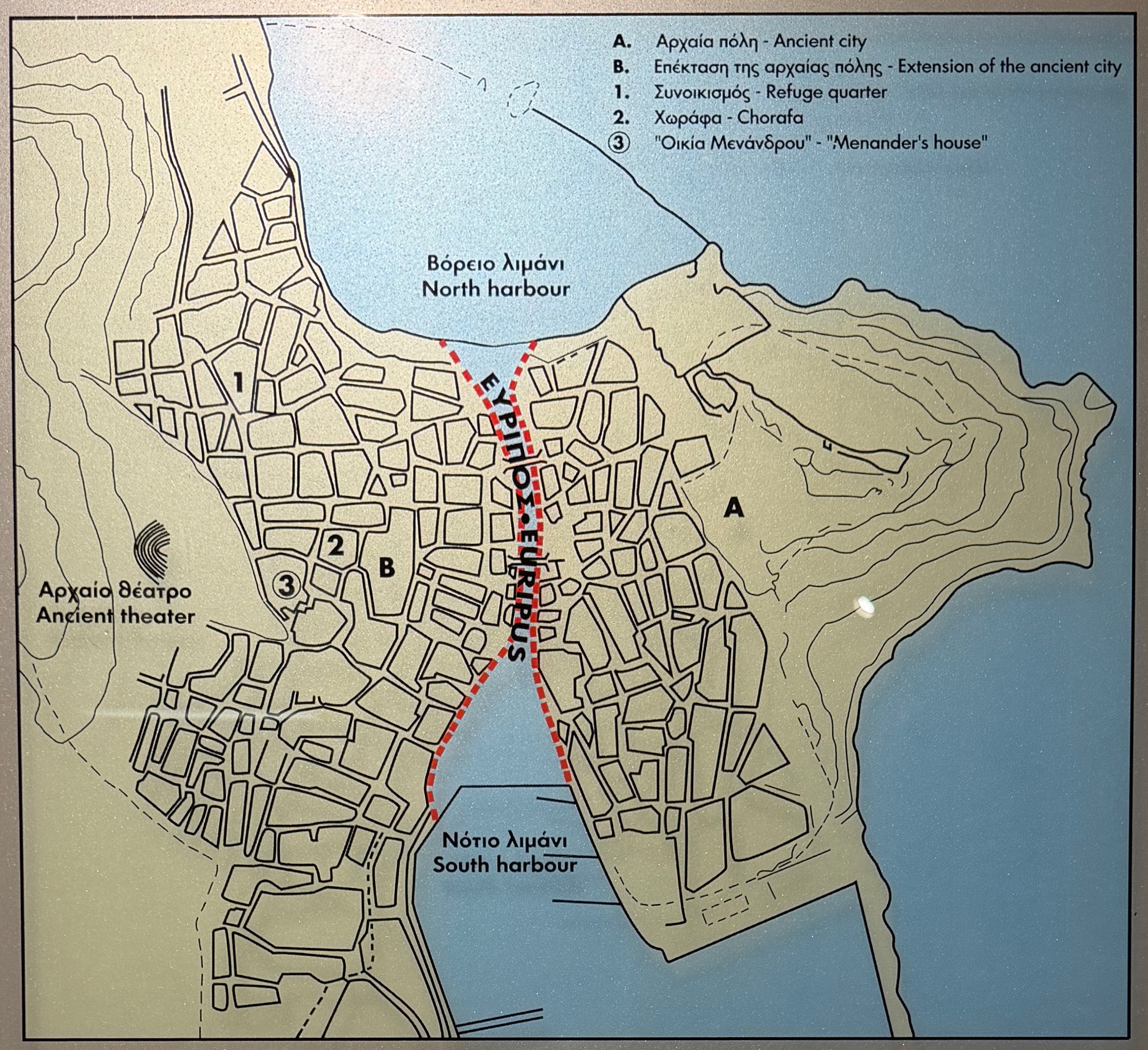
Mytilene was the greatest of the Aeolian poleis, and during the Archaic Period, they had significant involvement in events outside of the island. In Classical times, the city outgrew its local food production abilities and supplemented it through grain from the Black Sea regions.
Their territory covered ~500 sq km, the largest of the Lesbian poleis. They bordered Methymna to the north and were separated from Pyrrha to the west by the Pyrrhaian mountain chain. They struck coins of electrum, silver, and bronze from the 5th century BCE onward.
Methymna
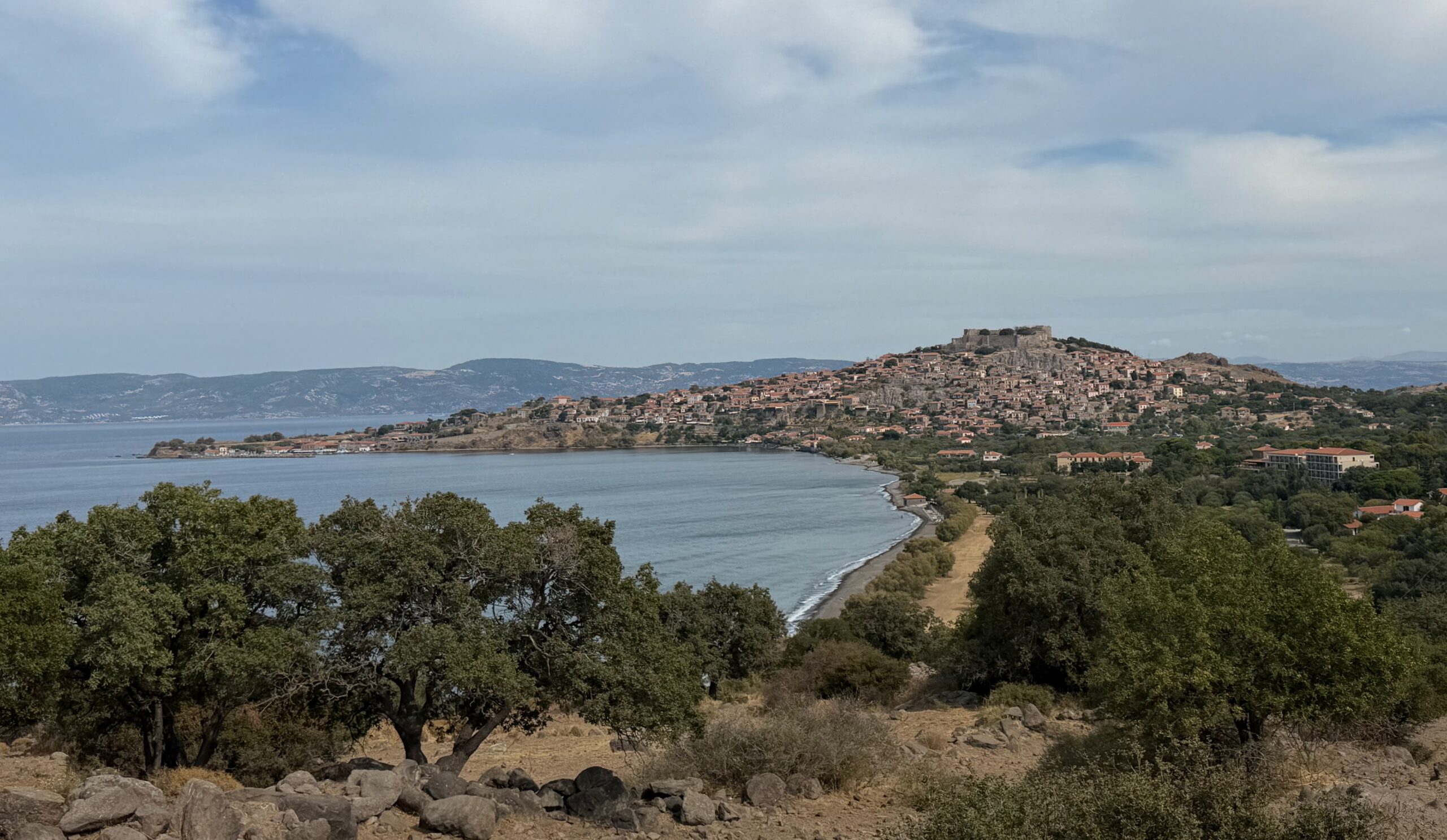
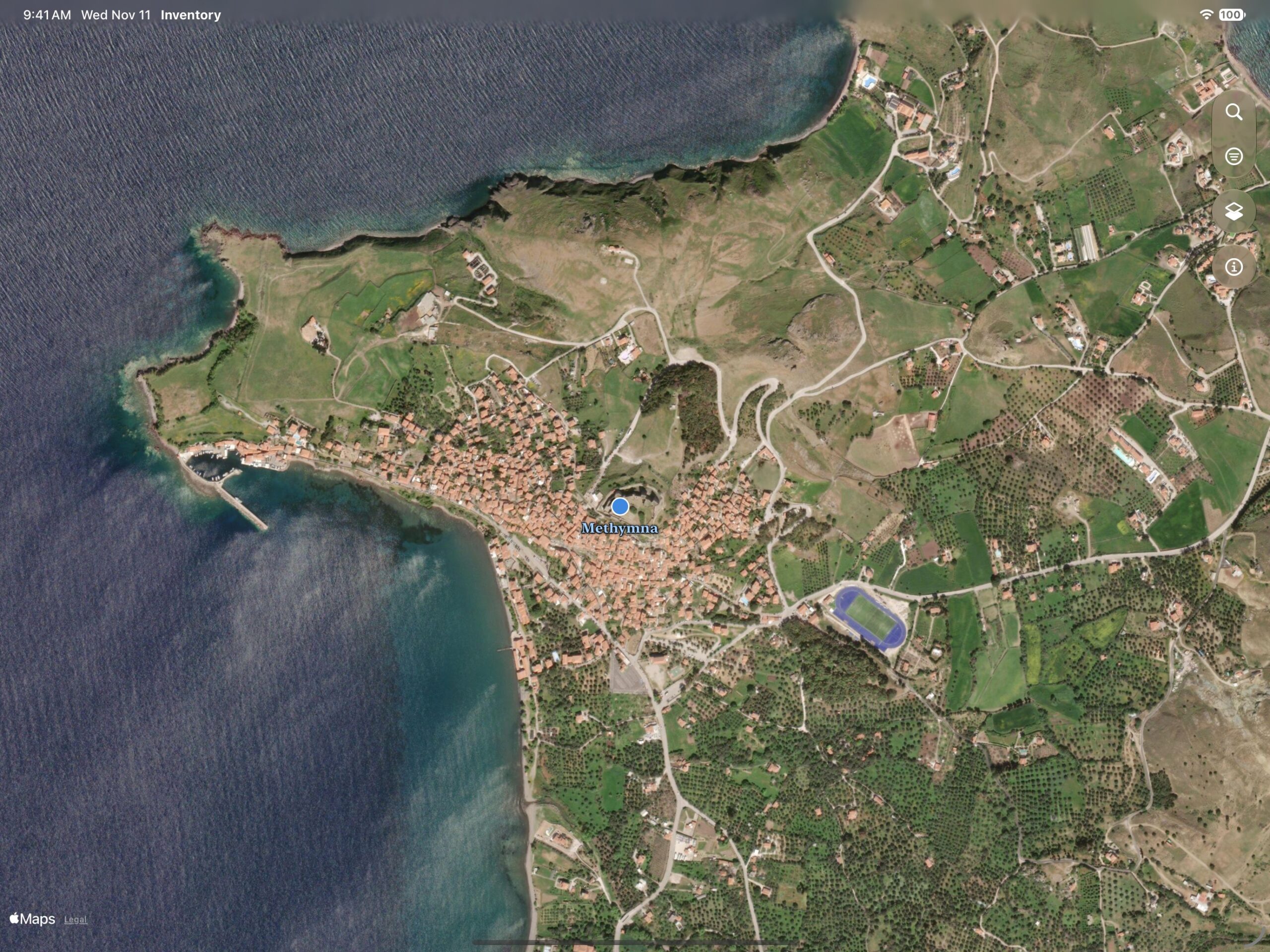
Ancient Methymna is situated on the northern tip of the island. Its remnants are located beneath the modern town of the same name (Molyvos), situated on and around a rocky hill with a small harbor at its base. Like Mytilene, little has been excavated and reported upon to date. Archaeological evidence suggests the site experienced a period of abandonment between the Late Bronze Age and the Geometric Period before re-emerging as a nucleated settlement (figures 7 and 8).
During the Classical Period, they remained loyal to Athens throughout the repeated attempts by Mytilene for autonomy from Athens and island synoecism. Their territory, the second largest of the Lesbian poleis, covered >400 sq km following the absorption of Arisba (perhaps <200 sq km prior). It shared borders with Mytilene to the east and Antissa to the west. They struck coins of electrum and silver.
Antissa
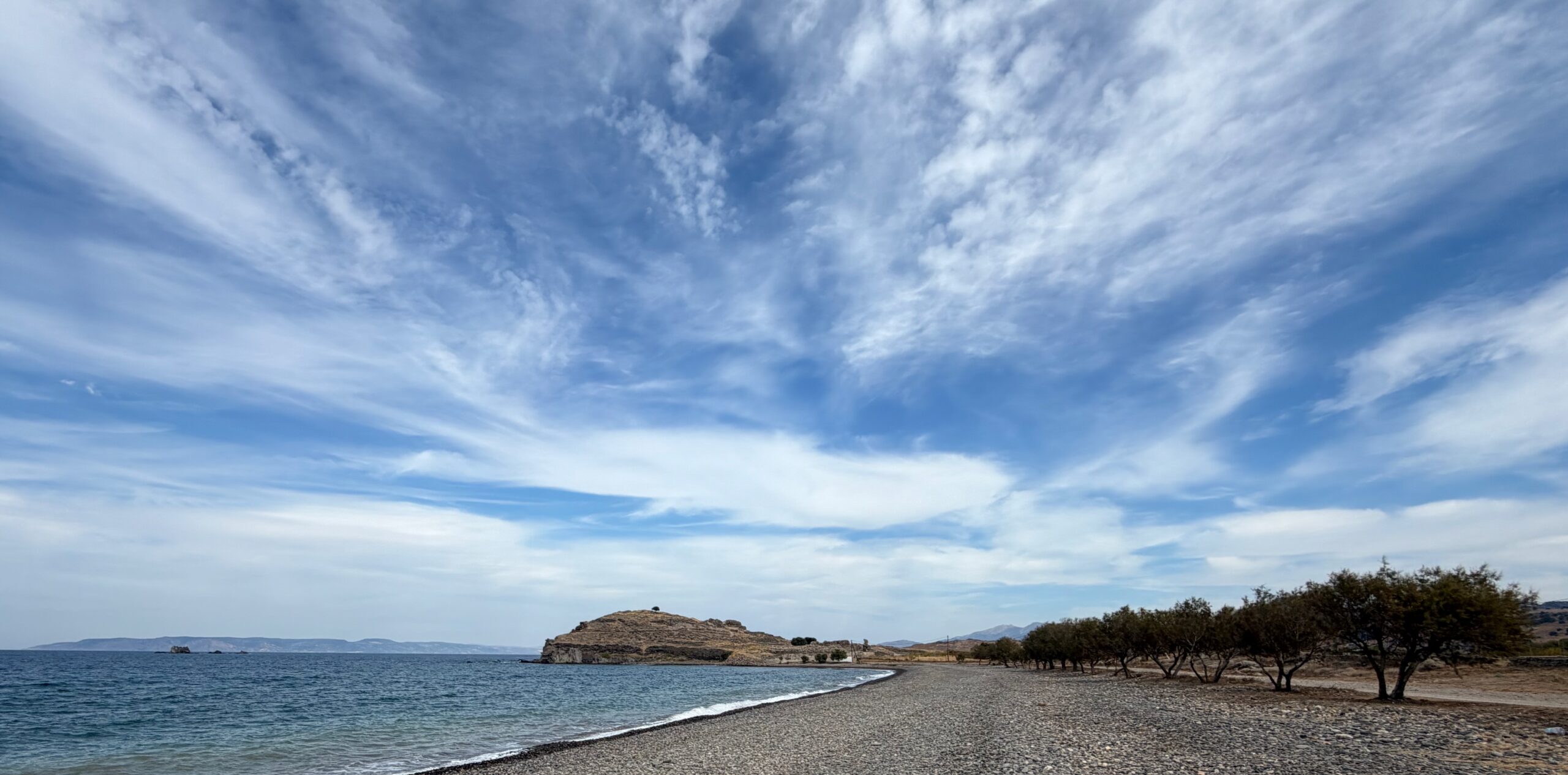
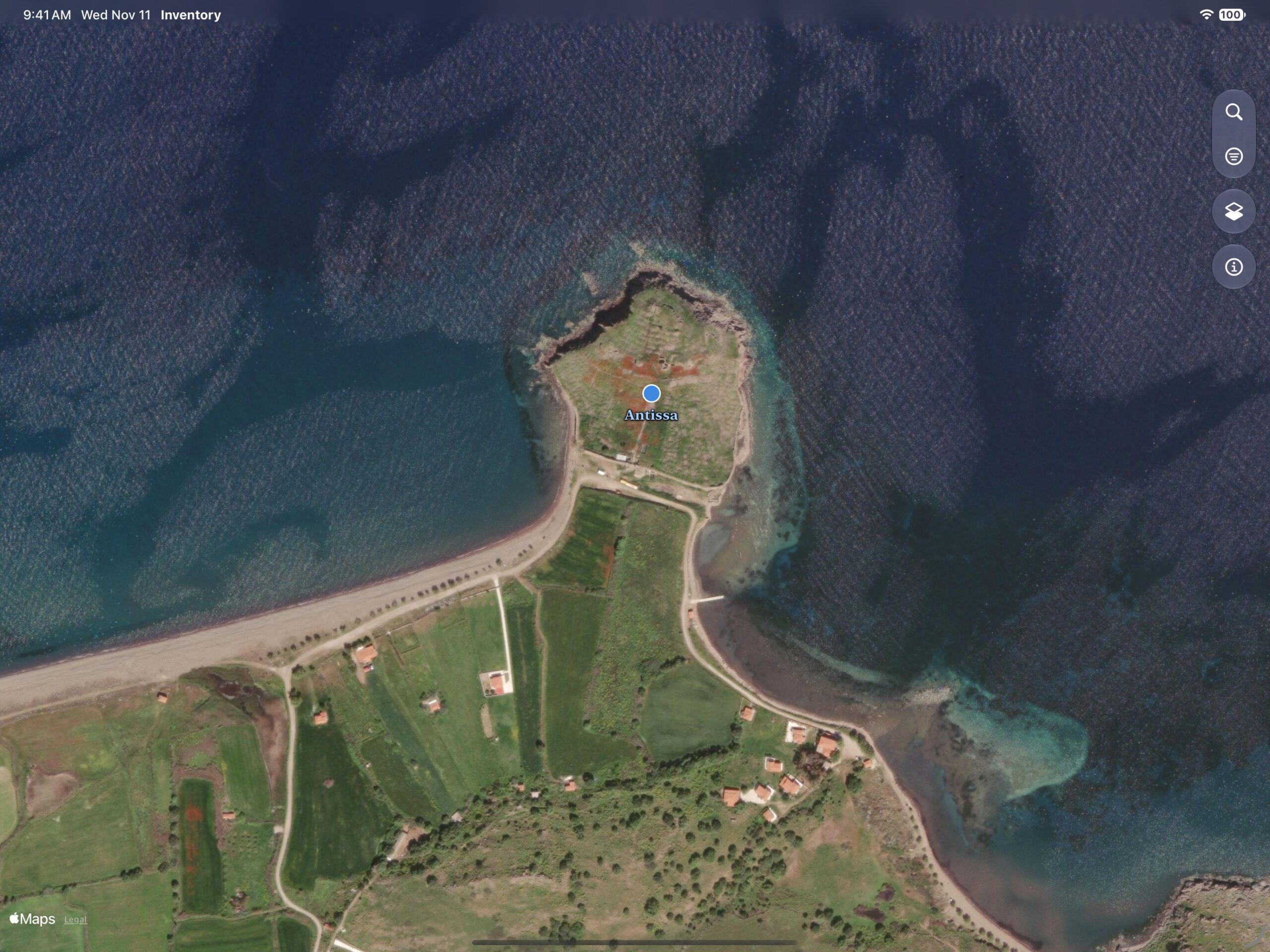
Antissa is located on the northwestern coast, west of Methymna, at the mostly uninhabited promontory of Ovriokastro. Reached by dirt road, the seaward promontory is capped by a ruined Genoese castle. While exploratory trench excavations in the 1930s first revealed settlement traces from the Archaic period around the inland hill, recent excavations have uncovered significant prehistoric, Bronze Age, and Classical structures. This confirms that, unlike its neighbors, the site was not completely abandoned during the early Iron Age transition (figures 8 and 9).
During the Classical Period, Antissa lacked political independence and generally followed the foreign policy lead of its powerful oligarchic neighbor, Mytilene, joining them in the failed revolt against Athens in 428 BCE.
Its territory covered ~250 sq km and it shared borders with Methymna to the east and Eresos to the south. The polis struck its own silver and bronze coinage from the 5th and 4th centuries BCE onward.
Eresos
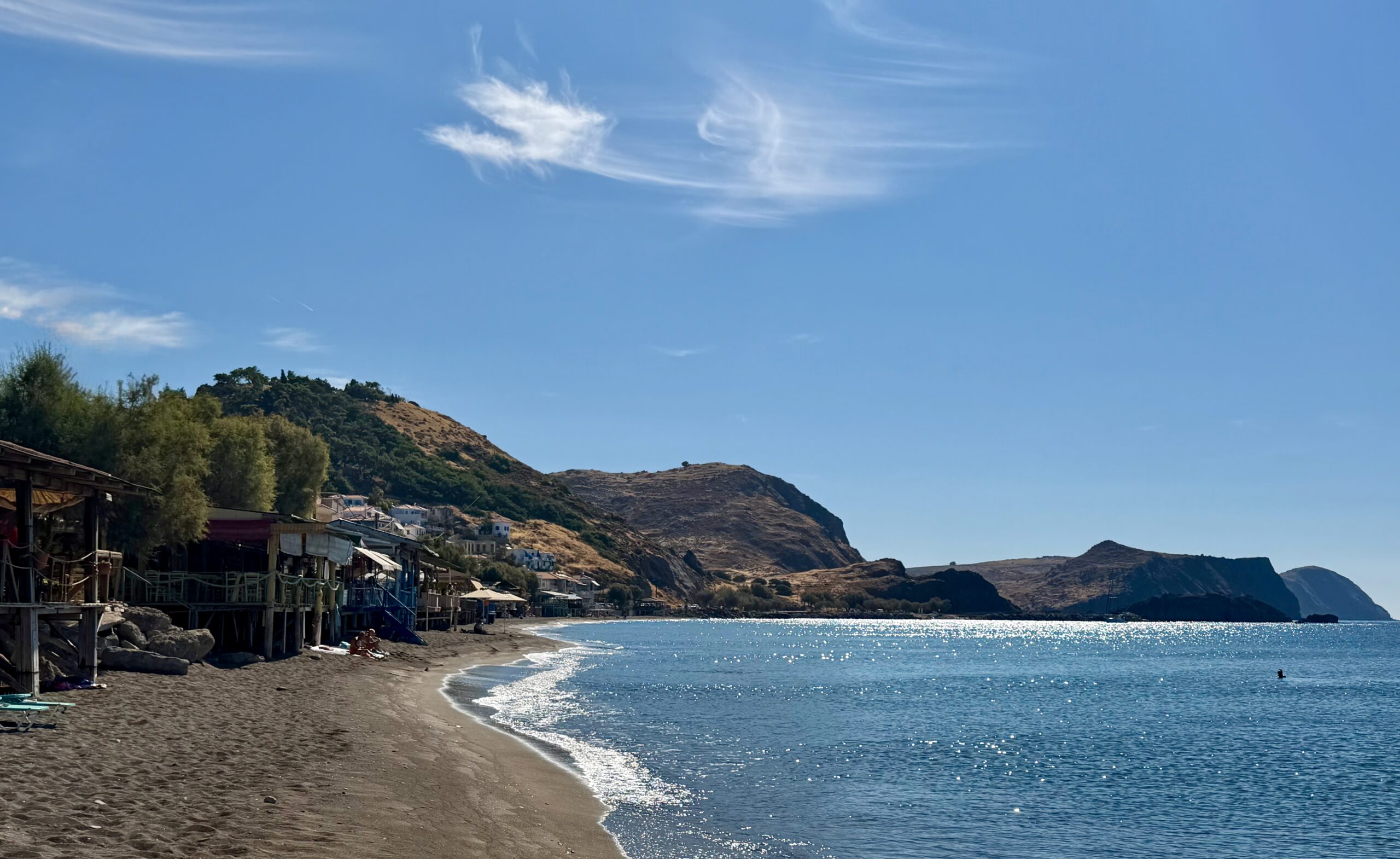
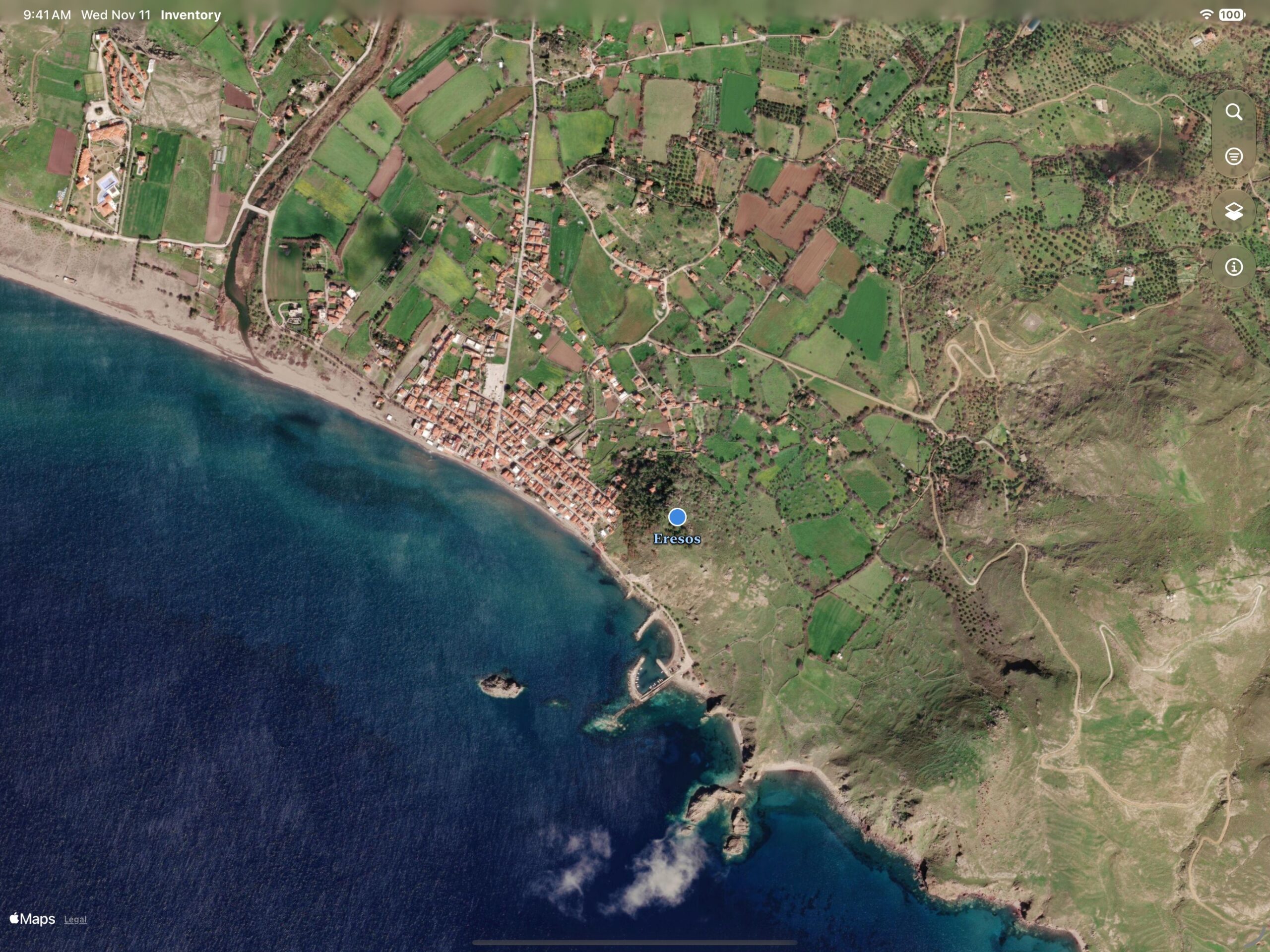
Continuing counterclockwise around the island, ancient Eresos is located at the base of the coastal plain in southwest Lesbos. Famous for its late 7th-century BCE native poet Sappho, the first known female Greek poet, its ancient acropolis is situated by the shore at the southern edge of the plain near the modern town of Skala Eresou. Limited excavations and surveys have produced mostly post-Roman remains, though substantial remnants of an Archaic fortification wall can still be found directly on its acropolis (Vigla Hill).
During the Classical Period, Eresos operated under the shadow of Mytilene, consistently backing the oligarchic coalition’s anti-Athenian foreign policy and joining the failed revolt of 428 BCE.
Its territory covered ~225 sq km and it shared borders with Antissa to the north and Pyrrha to the east. Eresos struck its own silver and bronze coinage somewhat later, primarily from the 4th and 3rd centuries BCE onward.
Arisba
Little is known of Arisba. Its site lies on a rocky rise in the central plain near modern Kalloni, north of the Gulf of Kalloni, and above a portion of the Tsinnias Stream. Apart from Bronze Age pottery sherds, few archaeological finds have been made dating prior to the Archaic Period (figures 11 and 12).
As mentioned, Arisba was destroyed by its northern neighbor, Methymna, likely during the 6th century BCE. The population was subjected to andrapodismos, and it is still unclear if the scant structural remains found on the site to date pre-date, post-date, or are contemporary with this catastrophic event.
Following its destruction, its territory—which originally covered an estimated 25 to 100 sq km—was permanently absorbed into the civic territory of Methymna, erasing Arisba from the political map before the launch of the Delian League.
Pyrrha
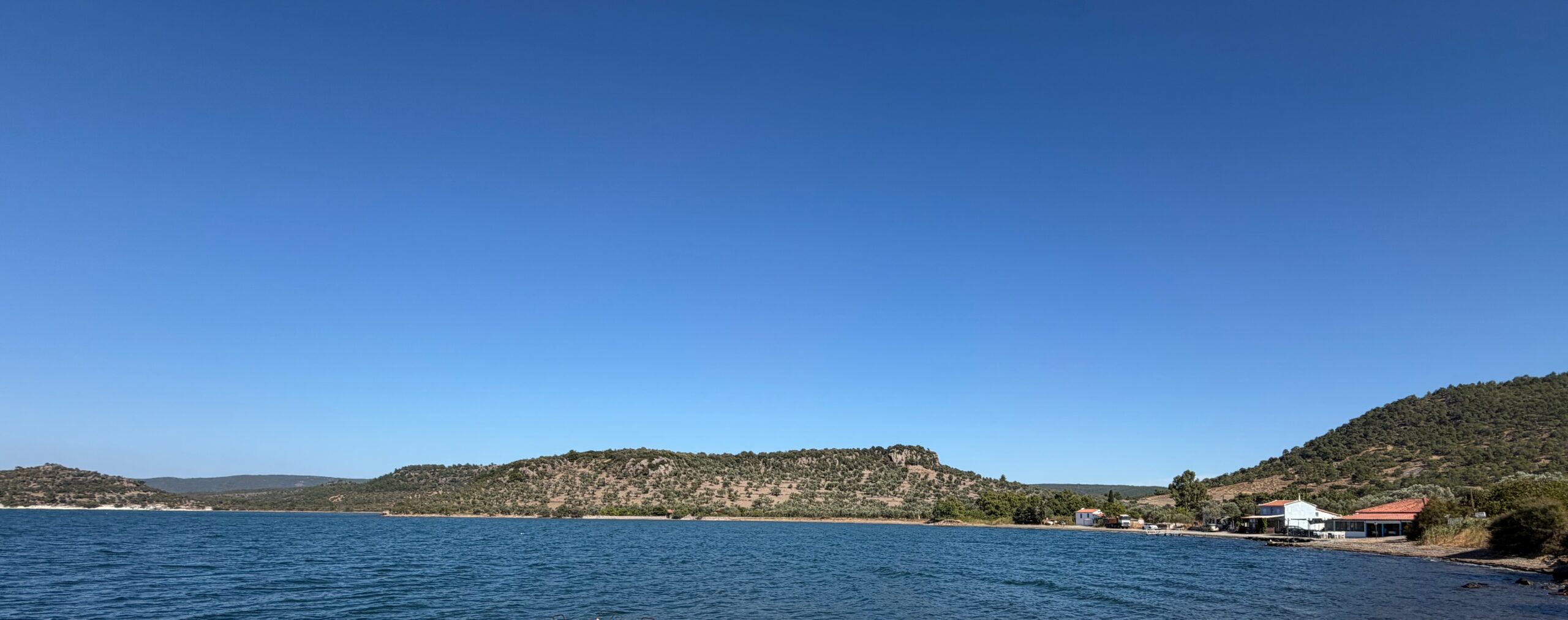
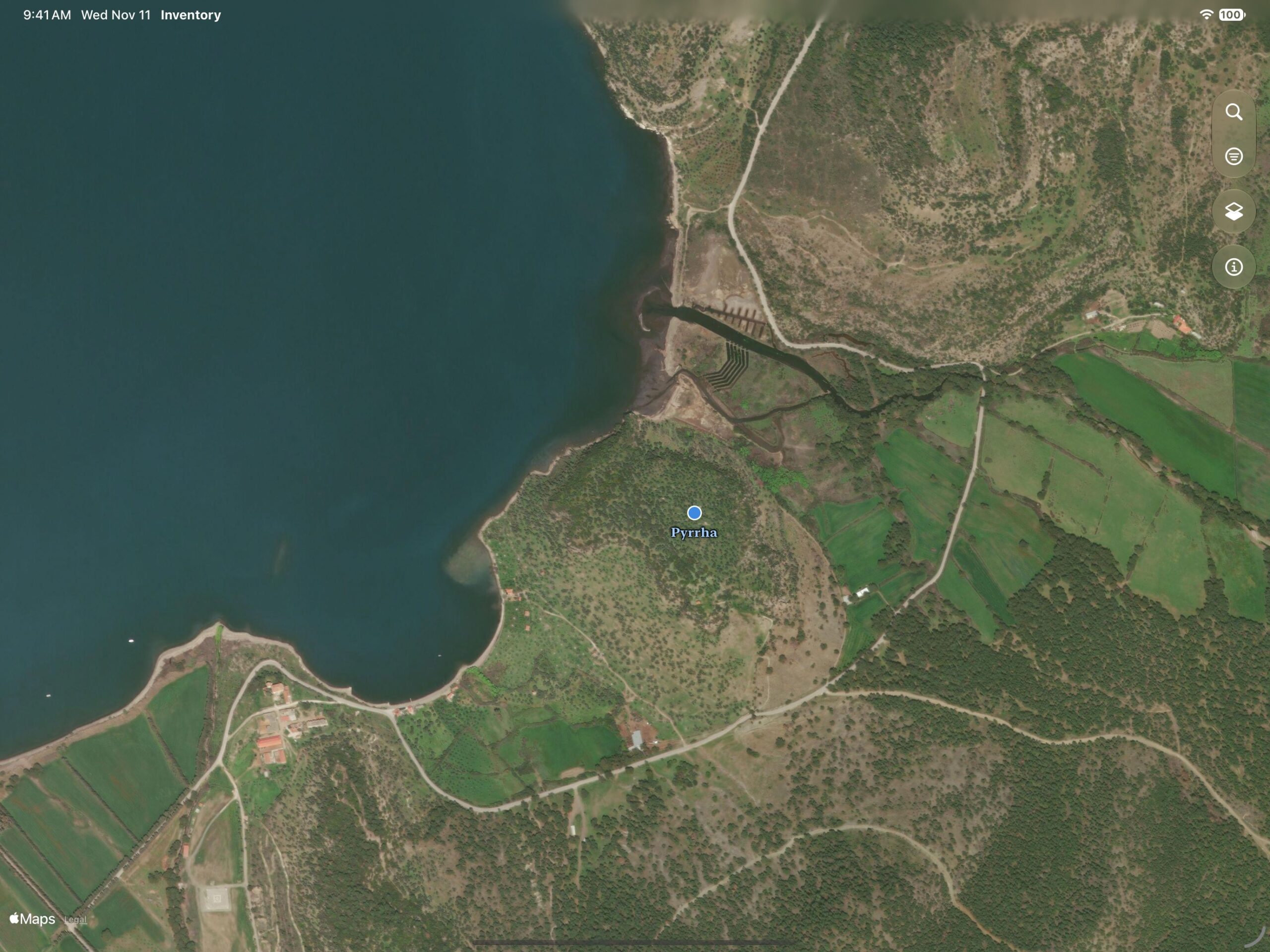
Finally, Pyrrha is situated on the east coast of the Gulf of Kalloni near the modern village of Achladeri. Like Mytilene, continuous settlement at the site dates to the Early Iron Age (with earlier Bronze Age traces also attested). Early Archaic structural remains have been found on its acropolis (situated on private land), while coastal subsidence and rising sea levels have submerged harbor-related buildings along the shore south and southwest of the acropolis. A catastrophic earthquake around 231 BCE sank a large portion of the polis’s lower urban core into the gulf and caused its main northern harbor basin to subside and eventually silt up (figures 14 and 15).
During the Classical Period, Pyrrha lacked independent foreign policy initiative and consistently aligned with its powerful oligarchic neighbor, Mytilene, acting as a crucial military staging ground during the 428 BCE revolt against Athens.
Its territory covered perhaps as much as 250 sq km. It shared borders with Methymna to the north and was separated from Mytilene to the east by the Pyrrhaian mountain chain. They struck their own local bronze coinage during the 4th century BCE.
Athens Reconsiders, Perhaps Too Late?
Shortly after Paches allowed the Mytilenean diplomats to sail for Athens, he rounded up roughly 1,000 men he deemed the principal architects of the rebellion. To avoid violating the local truce terms on Lesbos, he initially held them on the nearby island of Tenedos before sending them to Athens in chains.
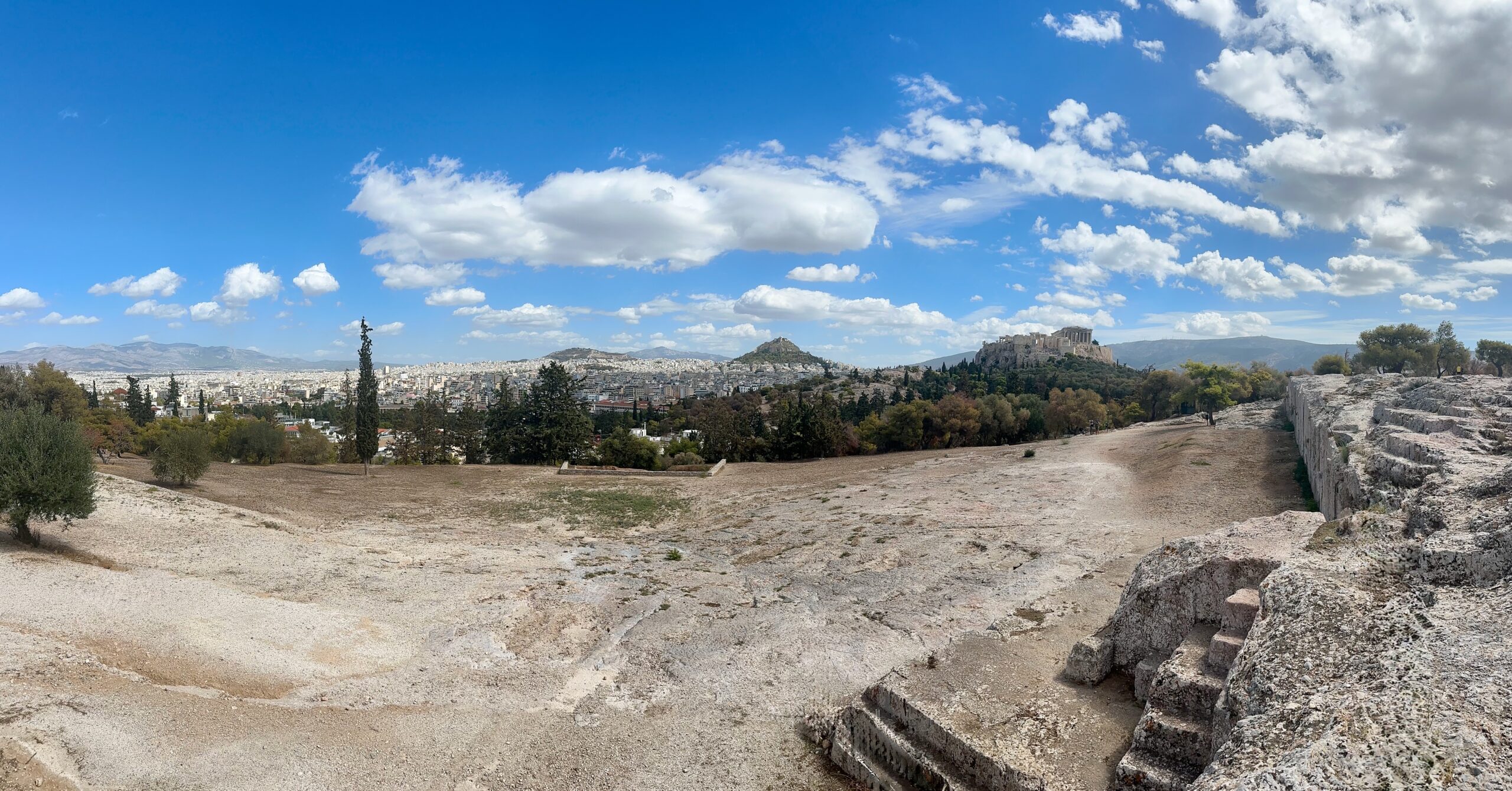
The day after the first trireme set sail for Lesbos bearing the order of andrapodismos, the Athenian Assembly met again to reconsider the matter, this time with the Mytilenean representatives. Moved by the frantic pleading of the Mytilenean envoys and their Athenian allies, the citizens experienced a sudden change of heart. Ultimately, the assembly voted to spare the general population left on Lesbos and separately decreed that the ~1,000 Mytilenean ringleaders held in captivity would be executed (figure 16).
Following these decisions, a second ship was dispatched immediately to rescind the prior order. What happened next is recounted in vivid detail by Thucydides.
καὶ ἡ μὲν προτέρα ναῦς ἡμέρᾳ καὶ νυκτὶ προείχεν, ἡ δ’ ὑστέρα ἐπορεύετο οὕτως ὥστε ἡ μὲν σπουδὴ τῶν πλεόντων τοιαύτη ἐγένετο ὥστε ἤσθιόν τε ἅμα ἐλαύνοντες, οἶνον καὶ ἔλαιον ἄλφιτα πεφυραμένα, καὶοἱ μὲν ἐκάθευδον ἐν μέρει, οἱ δὲ ἤλαυνον· ἐπειδὴ δὲ ἄνεμος ἐναντίος οὐκ ἐγένετο καὶ ἡ προτέρα ναῦς οὐ σπουδῇ ἔπλει ἐπὶ πρᾶγμα ἀλλόκοτον, ἡ μὲν φθάνει τοσοῦτον ὅσον Πάχητα ἀνεγνωκέναι τὸ ψήφισμα καὶ μέλλειν δράσειν τὰ δεδογμένα, ἡ δ’ ὑστέρα αὐτῇ ἐπικαταγομένη διεκώλυσε μὴ διαφθεῖραι. παρὰτοσοῦτον μὲν ἡ Μυτιλήνη ἦλθε κινδύνου.
— Θουκυδίδης, Ἱστορίαι, 3.49.3-4
“The first ship had a start of a day and a night, but the second crew rowed without stopping, eating barley kneaded with wine and oil while they stayed at the oars, and sleeping in turns. As there happened to be no wind against them, and the first ship was not hurrying on so monstrous an errand, it was only just overtaken. The first had arrived, and Paches was on the point of executing the decree, when the second put into harbor and prevented the massacre. By so narrow a margin did Mytilene escape.”
— Thucydides, 3.49.3-4
Klerouchs or Cleruchs (from κληροῦχος, “lot-holder”): Citizens of ancient Athens who were granted allotments of agricultural land (kleroi) in conquered or dependent territories.
Epilogue
While Lesbos narrowly avoided the worst consequences, it did suffer greatly (except for Methymna). The 1,000 leaders executed represented ~10% of the adult male citizen population of Mytilene and ~5% of the island’s total rebelling citizen population. Athens seized all the agricultural lands of Mytilene, Antissa, Eresos, and Pyrrha, dividing them into 3,000 plots. A sum of 300 was dedicated to the gods and the remaining 2,700 were assigned to Athenian settlers (Klerouchs). Local Lesbians were forced to work, on land they once owned, as tenant farmers paying rent to their Athenian landlords. Defensive walls were pulled down and Lesbian navies were terminated. The punishment was severe enough that standard war reparations were not levied.
Lesbos attempted to revolt again in 412 BCE and failed. When Athens fell in 404 BCE, the Peloponnesians became their new oppressors. While Lesbos eventually regained its autonomy under the Second Athenian League in the 4th century BCE, the period between 478 BCE and 428 BCE ironically remains famous as their original golden era of freedom while part of the Delian League.
References
- M.H. Hansen & T.H. Nielsen, An Inventory of Archaic and Classical Poleis: An Investigation Conducted by The Polis Centre for the Danish National Research Foundation, Oxford University Press, 2004.
- N. Spencer, Early Lesbos between East and West: A ‘Grey Area’ of Aegean Archaeology, The Annual of the British School at Athens, Vol. 90, Centenary Volume, 1995, pp. 269-306.
- Ephorate of Antiquities of Lesbos. (n.d.). Ovriokastro of Ancient Antissa. Hellenic Ministry of Culture. https://www.efales-ar.gr/en/ancient_site/ovriokastro-of-antissa/
- Ellis-Evans, A. (2026). The Silver Coinage of Antissa. Tekmeria, 20, 155-169. https://doi.org/10.12681/ihr.46643.
- Thucydides, The Peloponnesian War (English), trans. Richard Crawley (London: J.M. Dent & Sons, 1910).
- Thucydides, The Peloponnesian War (Greek), Historiae, ed. Henry Stuart Jones and John Enoch Powell (Oxford: Clarendon Press, 1942).
- D. Kagan, The Arcidamian War (New History of the Peloponnesian War) (Volume Two), Cornell University Press, 1990.
- J. Taylor, Polis Inventory (app) – A companion to the HN Polis Inventory, available on the Apple App Store https://apps.apple.com/us/app/polis-inventory/id1527341314.