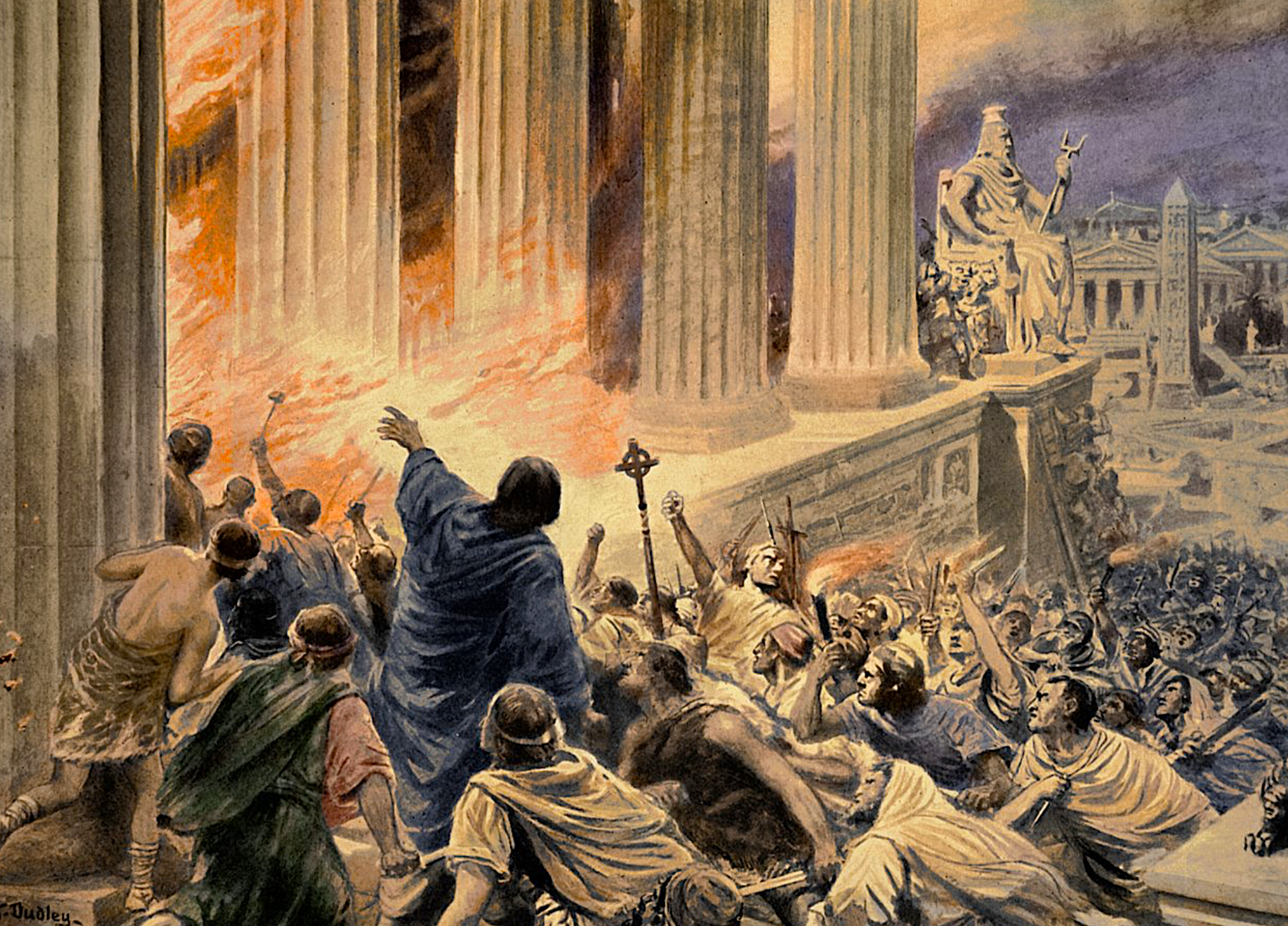
Robert. A. Dudley, Burning of Library of Alexandria, AD 391 (courtesy of Bridgman Images)
“A room without books is like a body without a soul”
– Attributed to Cicero, Letters to Atticus iv.8
By Cyrus Mohebi –
Napoleon, Ptolemy I Soter, and Claudius were all rulers who controlled and conquered land. What do these historical figures all have in common? In the wake of their campaigns, many of the people affected by these rulers were forgotten by those who recorded history. As a result, individuals and cultures outside the narrative of these victors often disappear from the historical record; as we say now, “history is written by the victors.” But surely the culture of these conquered people was preserved? Napoleon took enormous quantities of Italian art back to Paris with him. Claudius brought bounties of metals, slaves, and oysters from Britannia, and we still have the material and knowledge surrounding these conquests in the modern era.1
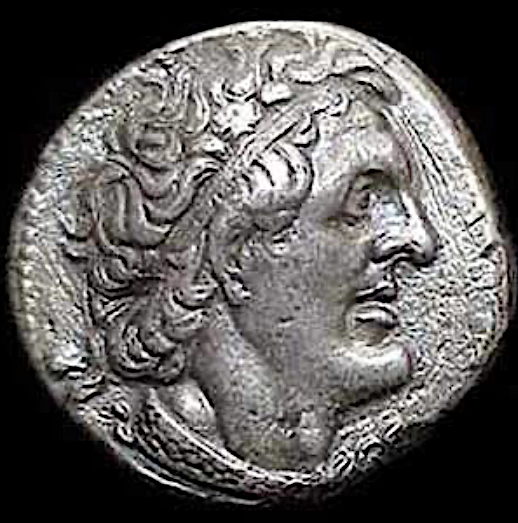
Silver coin of Ptolemy I Soter, ca, 4th-3rd c. BCE (image in public domain)
But when late Egyptian rulers, like Ptolemy I Soter, assimilated foreign lands, he stored the knowledge and traditions of the conquered people in the new and now famous Library of Alexandria, along with artifacts in a museum adjacent to the library, the Mouseion, which in Latin (Museum) translates to the “House of the Muse”, at least a reference to Clio, the Muse of History among the other Muses.2 When the Library of Alexandria was burned for the first time around 48 BCE, we did not just lose papers or old books; we lost the stories and cultural wisdom of people unknown to modern scholars, in part because history is written by the victors. The destruction of the Library of Alexandria mattered because it changed what later civilizations could know, remember, and imagine about the ancient world. If the Library had survived, scholars might possess a fuller historical record of the people and cultures of North Africa and West Asia.

To further clarify this claim, we first need to discuss how the library was founded. Originally, the library appears to have functioned as a collection of artifacts and literary works, housing many of the more famous texts from the ancient world. As the kingdom of Egypt grew, and Alexandria became a major port for ancient shipping routes across the Mediterranean, the Library and Museum were separated and, over time, developed into distinct institutions, though they maintained proximity to each other, serving related but different purposes. The Library also became a house of knowledge for African and Asian thinkers, astronomers, mathematicians, poets, and philosophers, and served as the center of intellectual activity for scholars across the Mediterranean world. The Library was founded on the principle that anyone qualified could visit, read, and write in a sanctuary of ancient knowledge. In the library itself, there were many works ranging from poetry by people like Homer to non-fiction writing about animals, as well as collections describing the different peoples of the ancient world, including groups that modern scholars do not fully understand or can no longer reconstruct in detail.
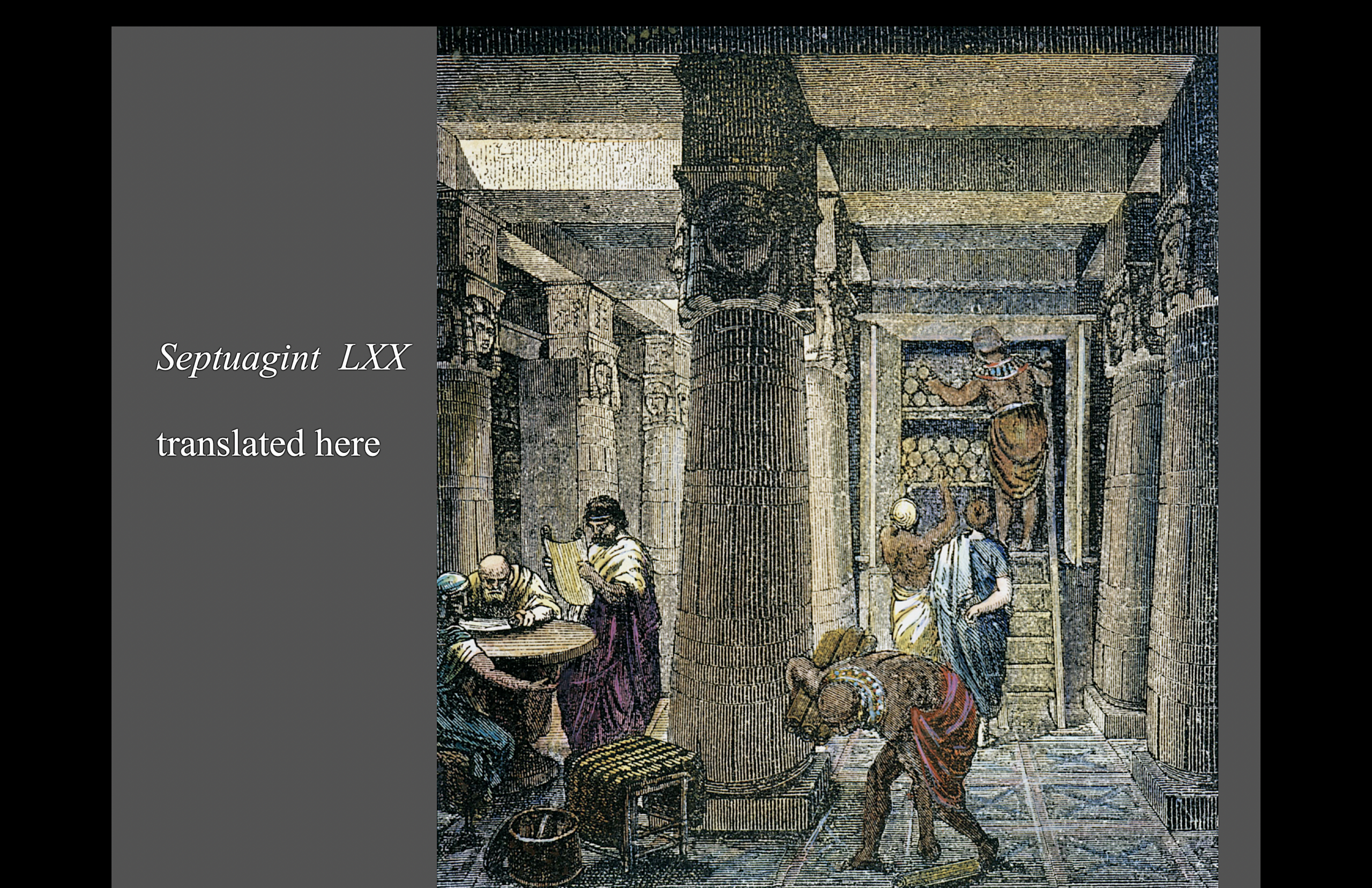
One ancient, ironic account is that Ptolemy III Euergetes asked Athens for the original copies of Aeschylus, Sophocles and Euripides in exchange for 15 talents of silver as a security deposit demanded by Athens, claiming he would copy them and then return them; however, he paid Athens the silver but did not return the original texts thus forfeiting the money. Ptolemy II Philadelphus also had seventy Jewish elders in Alexandria translate their sacred scriptures into Greek at the library, giving it the name Septuaginta, or LXX “Seventy” in Latin.
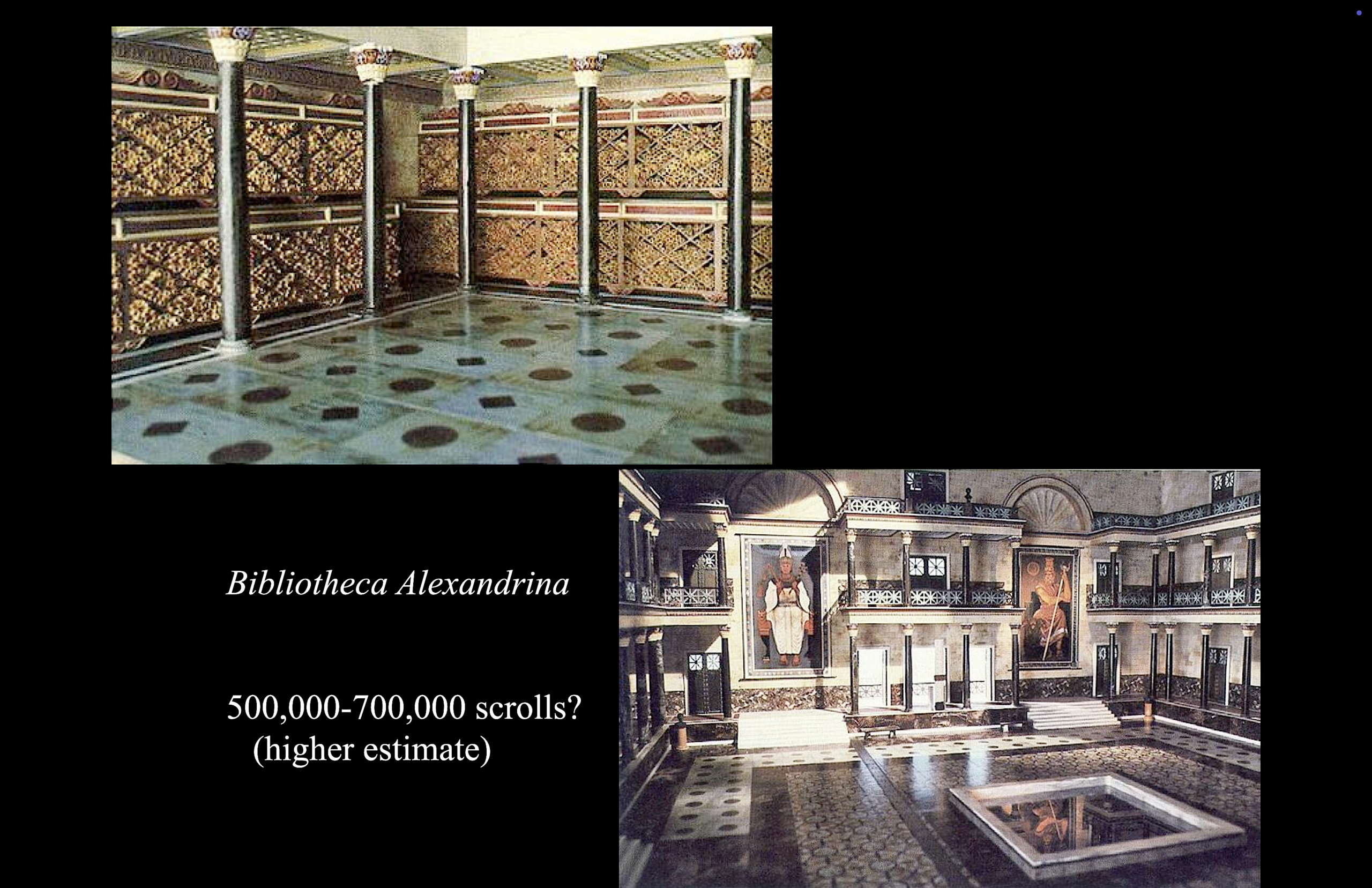
Later on, in the library, ancient thinkers and scholars alike would gather in the library to discuss current matters and science; these scientists and engineers included Archimedes, Ctesibius, Aristarchus of Samos, and Eratosthenes, who was the head librarian in his time. The library’s size grew to anywhere from 300,000 to 700,000 scrolls at its height.
Myths and legends abound concerning the destruction of the Library of Alexandria. But what is the real story behind the first decimation of this Library? Historians often connect at least part of the damage to a fire during the Battle of Pharsalus (48 BCE), Julius Caesar’s battle with Ptolemy XIII, though the exact details remain unclear. While many historians comment on the burning, Plutarch is the first to associate the fire with Caesar, explaining that he “was forced to repel the danger [of the enemy] by using fire, and this spread from the dockyards and destroyed the great library” (Life of Caesar, XLIX.6).3 Even so, Plutarch’s account is only one interpretation, and modern historians continue to debate the extent and origin of the damage.
It is also worth noting that the library sustained heavy damage in two other events after the first burning by Caesar. The second burning came during the Roman Emperor Aurelian’s rule (ca. 270 CE), during a period of turmoil caused by Queen Zenobia of the rebellious Palmyrene Empire taking over the city of Alexandria. Regardless of the number of texts lost at the library over time, some modern scholars safely estimate that only ~10% of all the works of classical antiquity survived. Some even conservatively suggest that only 3-5% of the works remain. The medical doctor Galen represents 50% of all remaining Greek texts, and only a quarter of Livy’s and a third of Pliny’s works have survived. Showing that regardless of the precise cause of the incident, the Library experienced significant destruction, even if responsibility cannot be placed with absolute certainty.
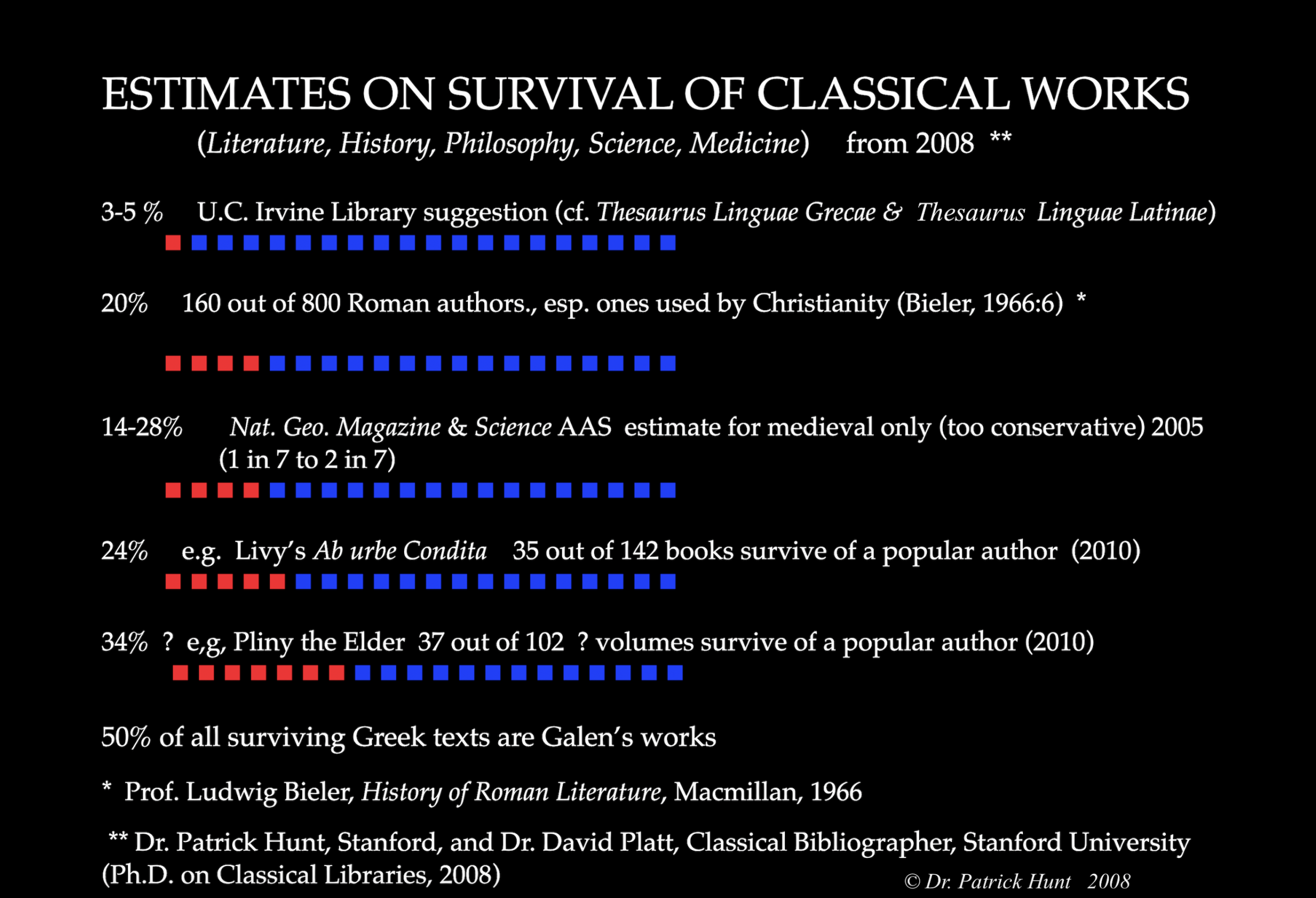
With the library’s burning, the documents, history, and knowledge preserved in the library were destroyed. This destruction led to many documents, histories, and forms of knowledge stored there being lost. While some works survived elsewhere, other materials, especially those concerning lesser-known peoples and cultures, may have existed only in Alexandria and were therefore permanently lost. Whatever survived beyond the Aurelian destruction is still unknown, as is the quantity of manuscripts possessed by the mathematician Hypatia in the Serapeum (ca. 390-415 CE) until she was killed by an anti-intellectual mob who ended up burning the remains of the already-ruined library sometime between 391-415 CE as depicted in the dramatic image at the top of the article. It is also unknown what else survived to the Muslim capture under the caliph Omar in the 7th century CE, as legends and cursory texts hint also he burned books there at Alexandria when the city fell.
Beyond the material items, the destruction of the Library of Alexandria also mattered symbolically because the institution represented more than a storehouse of texts. It embodied the ambition to gather and preserve knowledge from across the world. When such a place is destroyed, the loss goes beyond the material objects in the collection. The destruction of the Library represents the fragility of cultural memory itself. In Alexandria’s case, the fire signifies how easily centuries of human thought can be narrowed and erased, especially when the surviving record already favors the voices of the powerful over those of the conquered.
But did the Library of Alexandria actually help to “preserve” these cultural artifacts? It depends on one’s perspective. Some argue that the Library preserved aspects of cultures that might otherwise have disappeared. As Lionel Casson observes, “Ptolemy II endowed [the Library] with the ambitious objective of acquiring a copy of every book in the world,” casting the Library as an institution of cultural preservation.4. Many see the Library as a place that demonstrated the grandeur of people’s cultural artifacts, despite them possessing no power. Others would label this process of acquiring materials as theft and argue that it should not be praised. For example, scholars like Andrew Erskine have argued that the Library of Alexandria reinforced Greek superiority while excluding other cultures.5 Furthermore, questions about the Library’s contemporary preservation practices complicate its role as a stable institution. For example, some contemporary sources suggest that the Library’s contents were already in disarray before the fire.
To ask whether the Library preserved culture, however, is also to question the purpose of the Library and those who held power over it. The origins of the Library reflect an imbalance of power. Roy MacLeod situates the Library’s origins in a broader Mediterranean context, wherein rulers practiced the collecting and translating of texts from conquered or “foreign” people. These rulers sought “the books of all peoples […] and by the act of translating, rendered [those people] members of the dominant culture.”6 For these rulers, the looting of cultural artifacts was a method of colonization, and these violent practices suggest that the process of collecting texts was not neutral but tied to imperial and colonial power. By forcefully taking books, these rulers attempted to demonstrate “ownership” over the ideas and history of these “foreign” people. Through this violent process, the Library of Alexandria became a representation of power and colonialism, demonstrating the ways that museums can become a “symbol of subjugation.” The historical reality that the collection in Alexandria was built on violence calls into question the role of the Library as an institution of “preservation.” 7
If the Library of Alexandria still existed, the modern world would likely possess a broader and less fragmented understanding of the ancient past. Scholars might have more information on the cultures of North Africa, West Asia, and the wider Mediterranean area, especially for the people whose histories only survive in fragments. But the Library’s survival might also reveal a clearer understanding of how empires collected, translated, and controlled the knowledge of other people. In that sense, the world would look different not because ancient history would become complete, but because we would have more of the puzzle pieces needed, and our record of the ancient world would be less dependent on the victors alone.
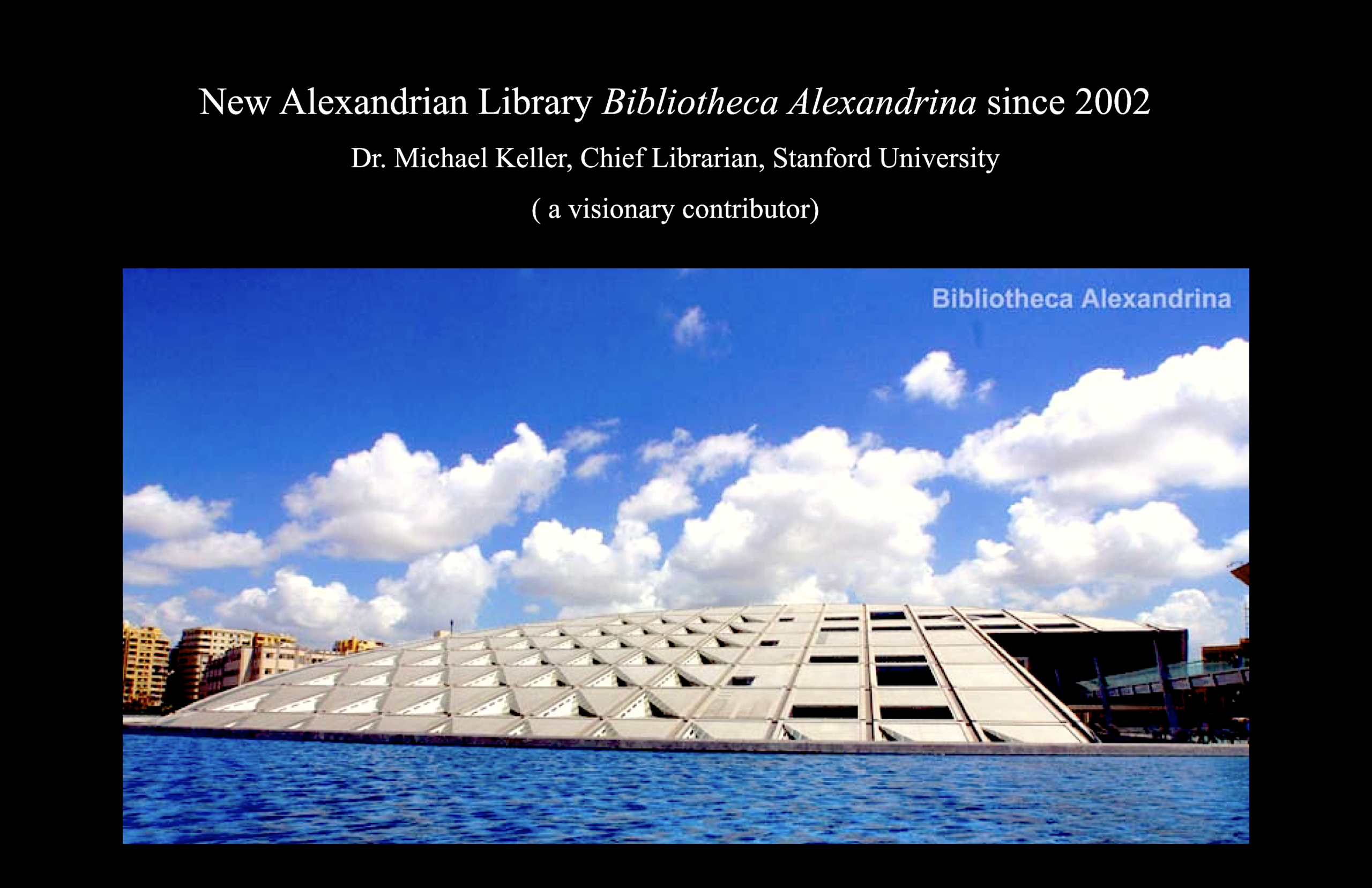
The reputation of the library is so great that in modern times, it has spawned a revival since 2002, in part led by Dr. Michael Keller, the chief librarian at Stanford, called “Bibliotheca Alexandrina” (New Alexandrian Library), in the city of Alexandria with shelf space for eight million books, but also an enormous digitised collection featuring over 100 terabytes of information.
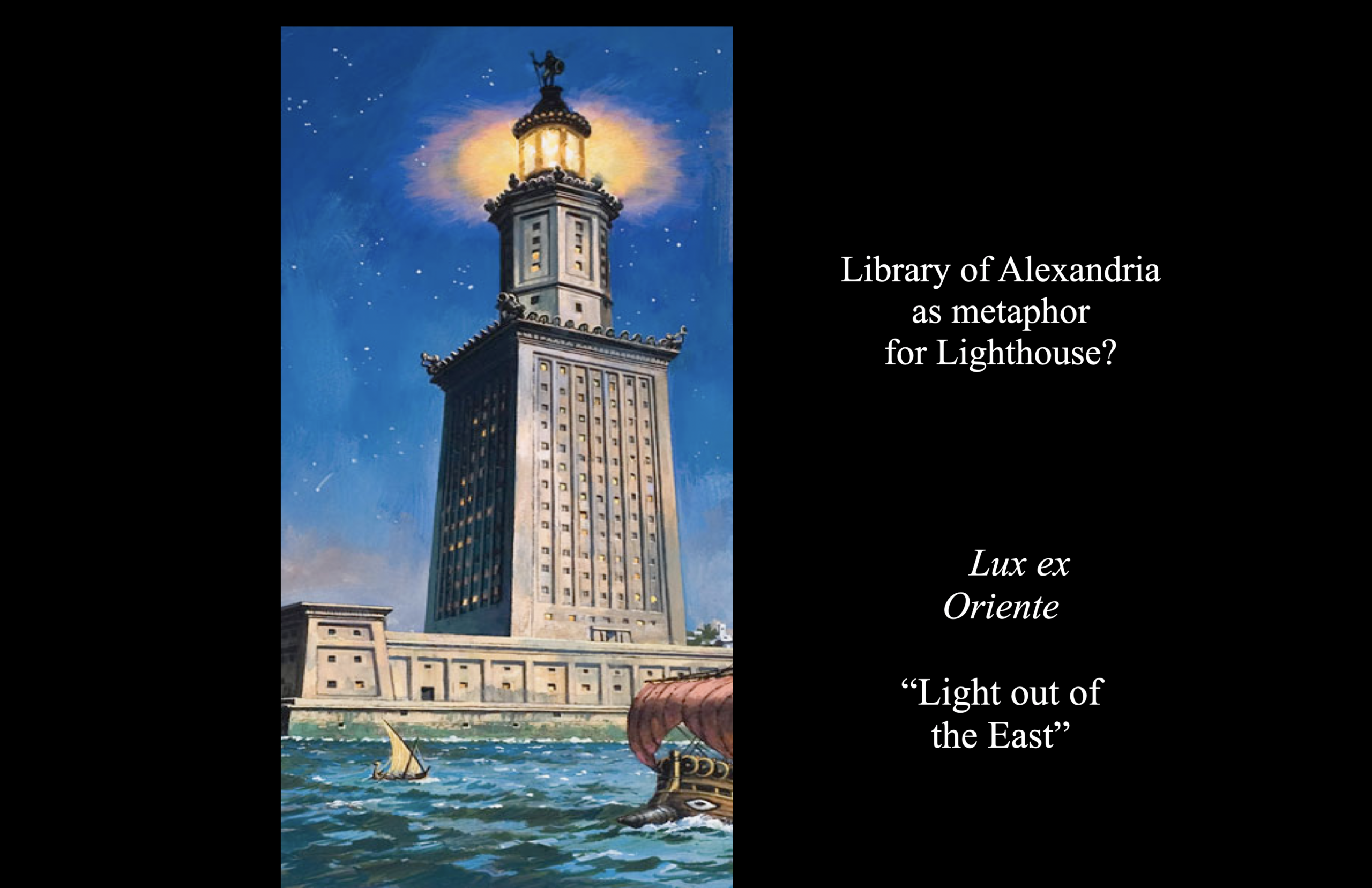
The legends of the original Library remain both verifiable and mythical; indeed, the Library of Alexandria metaphorically echoes the famous contemporary lighthouse (Pharos) of Alexandria, as a beacon and safe of knowledge in words: Lux ex oriente, “Light out of the East”.9
Sources:
Some of the information and images herein are attributable to a Stanford University course by Dr. Patrick Hunt, offered in the summer of 2026, ARC 109, titled “Seven Wonders of the Ancient World”.
Cassius Dio, Roman History 60.19–22, trans. Earnest Cary, (Loeb Classical Library: Cambridge, MA); Strabo, Geography 4.5.2, trans. Horace Leonard Jones, (Loeb Classical Library: Cambridge, MA) 254–55; Pliny the Elder, Natural History 32.21, trans. W. H. S. Jones, (Loeb Classical Library: Cambridge, MA) 502–3.
Andrew Erskine, “Culture and Power in Ptolemaic Egypt: The Museum and Library of Alexandria,” Greece and Rome, 2nd ser., 42.1 (1995) 38-48.
Plutarch: Parallel Lives, translated by Bernadotte Perrin (Loeb Classical Library: Cambridge, MA).
Lionel Casson, Libraries in the Ancient World (New Haven: Yale University Press, 2001) 31–32.
loc. cit., Erskine, 1995
Roy MacLeod, “Introduction,” in The Library of Alexandria: Ancient Centre of Learning (Roy MacLeod) 14.
Elena Baylis, “Looted Cultural Objects,” Columbia Law Review 124 (https://columbialawreview.org/content/looted-cultural-objectsdestroyedheldwere/
El-Abbadi, Mostafa. “Library of Alexandria”. Encyclopedia Britannica, 5 Aug. 2026, https://www.britannica.com/topic/Library-of-Alexandria. Accessed 15 August 2026.